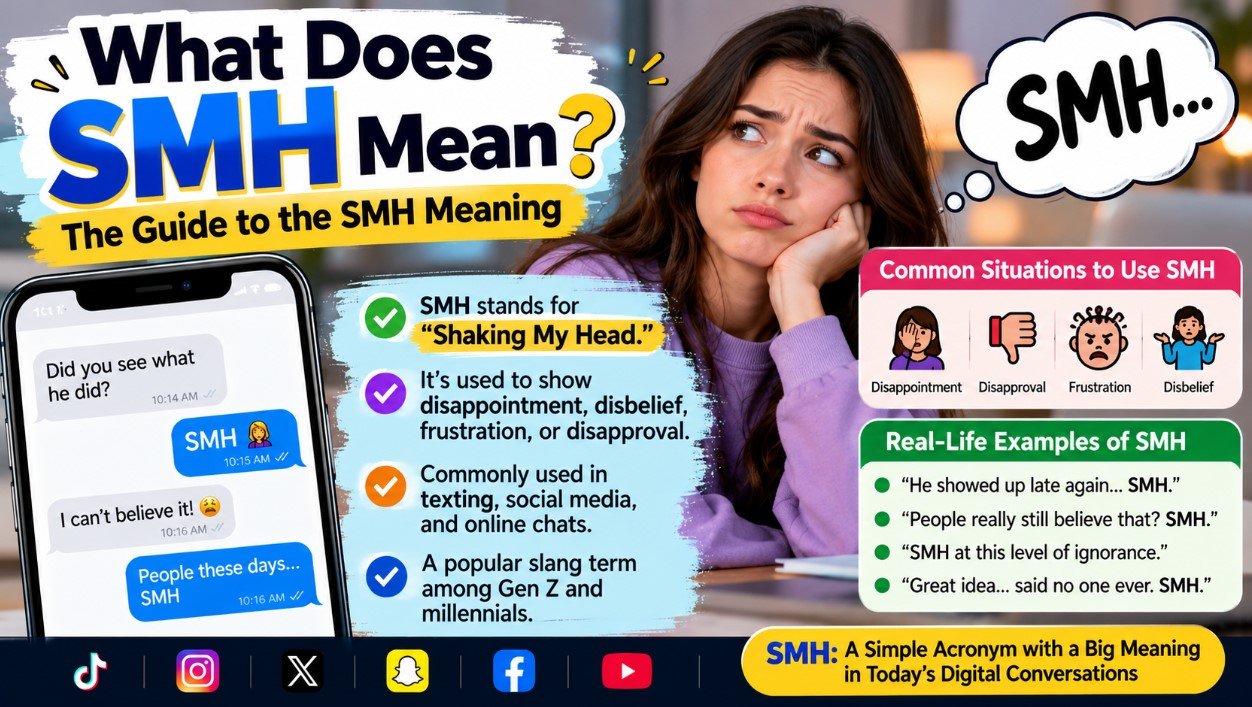
What Does SMH Mean? The Guide to the SMH Meaning
In the fast-paced world of digital communication, keeping up with internet slang can feel like learning a new language. If you have ever received a text message or seen a social media comment that left you confused, you are not alone. One of the most common acronyms floating around the internet today is SMH. But what exactly is the smh meaning, and how should you use it?
This comprehensive guide breaks down the true smh meaning, its history, variations, and the psychology behind why we use it. Whether you are a parent trying to decode a teenager’s text messages or a digital marketer studying online communication trends, this article provides everything you need to know about this popular abbreviation.
What is the SMH Meaning?
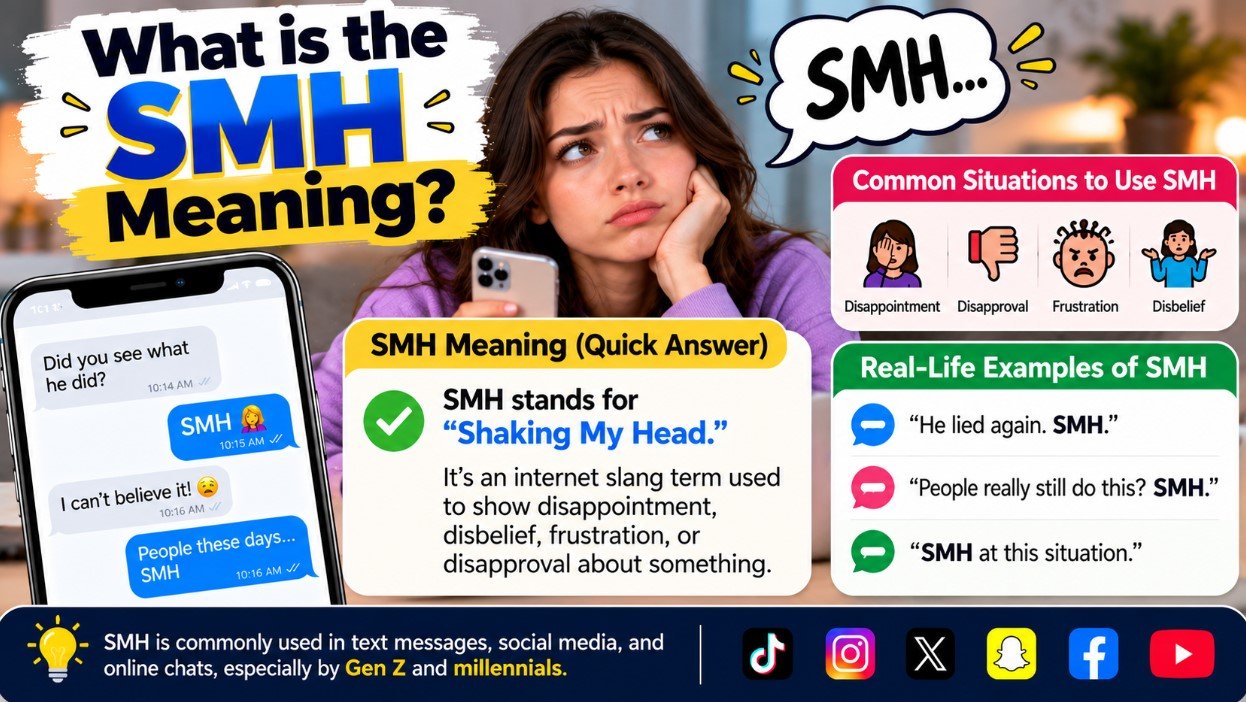
To win the featured snippet, here is the direct answer: The primary smh meaning is “shaking my head.”
Internet users type this acronym to express disappointment, disbelief, frustration, or secondhand embarrassment. When someone types SMH, they are indicating that words cannot fully capture their reaction, so they are physically (or metaphorically) shaking their head in disapproval.
Understanding the smh meaning is crucial because it acts as a digital substitute for body language. In face-to-face conversations, a subtle head shake instantly communicates your feelings. In a text-based environment, this simple three-letter abbreviation performs the exact same function.
Learn More: Pookie Meaning
The Origin and History of SMH
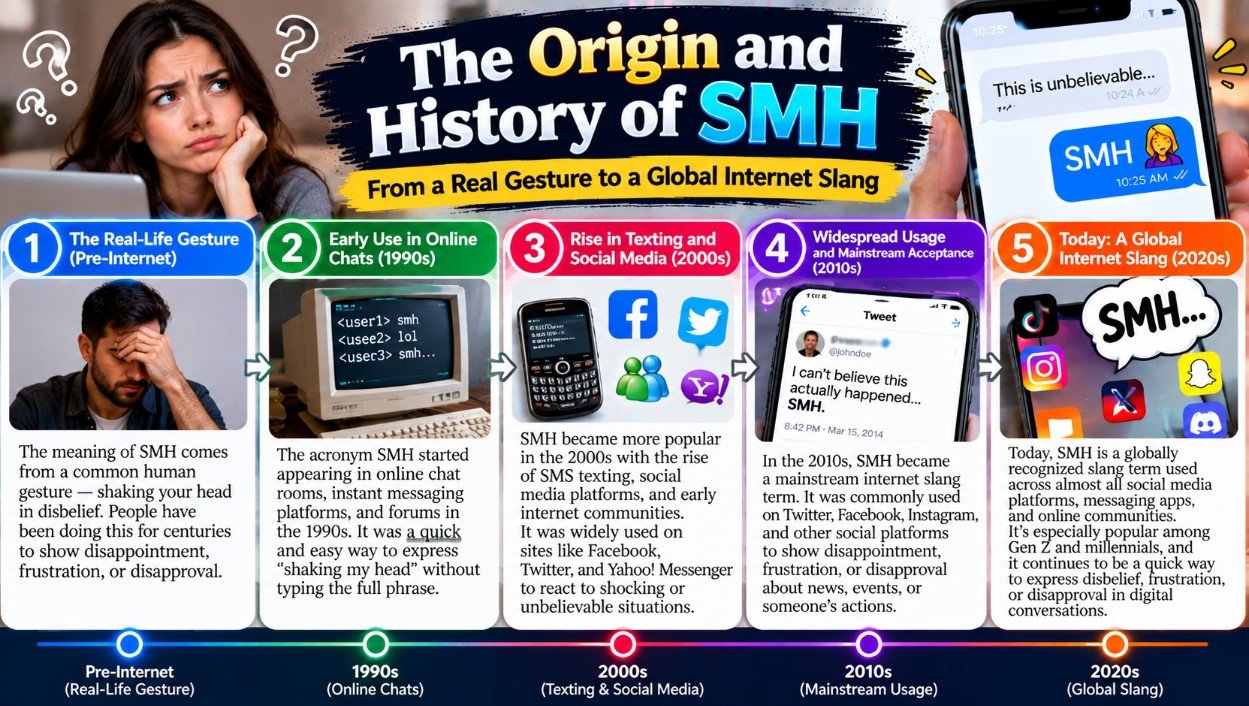
To fully grasp the smh meaning, we must look back at the early days of the internet. Before smartphones and emojis existed, people communicated in chat rooms, on message boards, and via instant messaging platforms like AOL Instant Messenger (AIM).
During the early 2000s, users needed ways to express emotions quickly using only standard keyboards. Typing out “I am shaking my head at this situation” took too long, especially on older mobile phones that required pressing a single key multiple times just to get one letter (T9 typing).
Linguists and internet historians trace the smh meaning back to the early 2000s, with its first entry in the Urban Dictionary appearing around 2004. Over the last two decades, the acronym evolved from an obscure chat room shortcut into a mainstream cultural staple used by millions daily.
How to Use SMH in Texting and Social Media
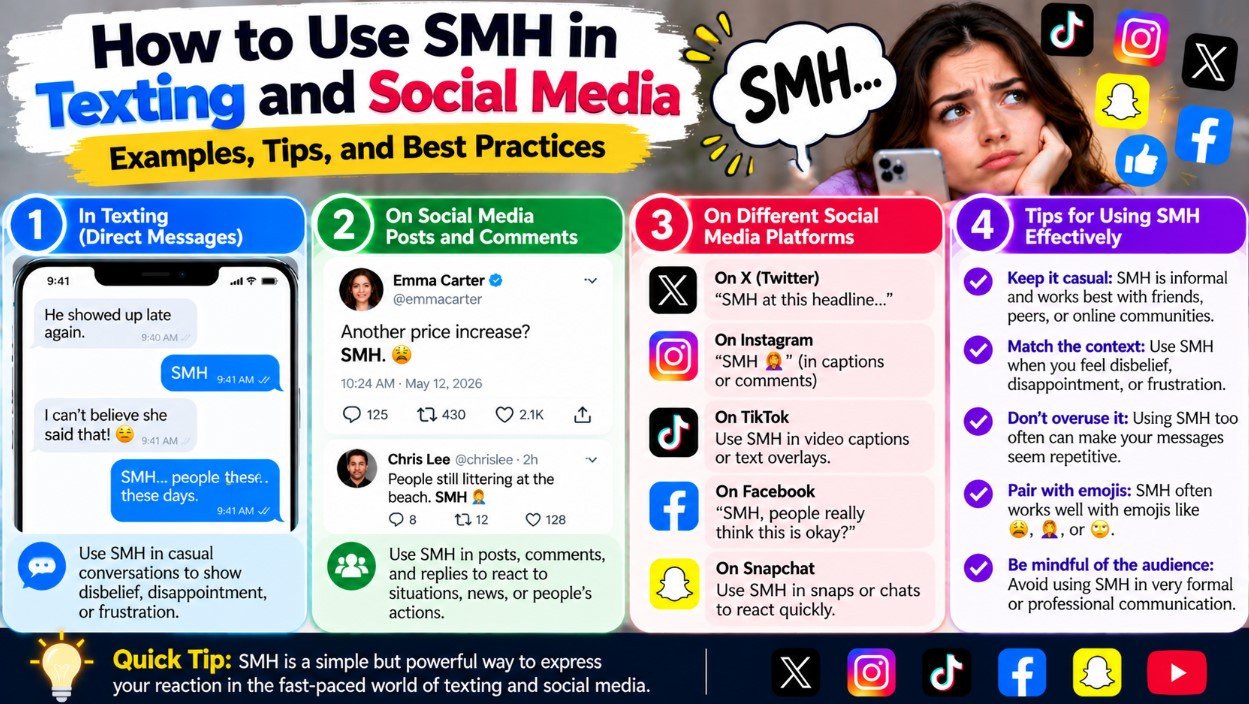
Knowing the smh meaning is only half the battle; knowing when to use it is just as important. The abbreviation thrives in situations where you are slightly annoyed or utterly baffled by a situation, person, or news event.
Contexts for Shaking Your Head
You can use this acronym in several distinct scenarios:
- Disappointment: When a sports team loses a game they should have won.
- Disbelief: When you read a news headline that seems completely absurd.
- Embarrassment: When a friend tells you about a ridiculous mistake they made.
- Playful Teasing: When bantering with friends over minor disagreements, like arguing over the best pizza topping.
SMH on TikTok vs. X (Twitter)
The smh meaning shifts slightly depending on the social media platform.
On X (formerly Twitter), character limits traditionally forced users to be concise. Here, SMH frequently accompanies quote posts containing controversial opinions.
On TikTok, the smh meaning often appears in text overlays on videos or in the comment section. Users type it to express collective secondhand embarrassment when a creator posts a “cringe” video or tells an awkward story.
Variations and Similar Slang Terms
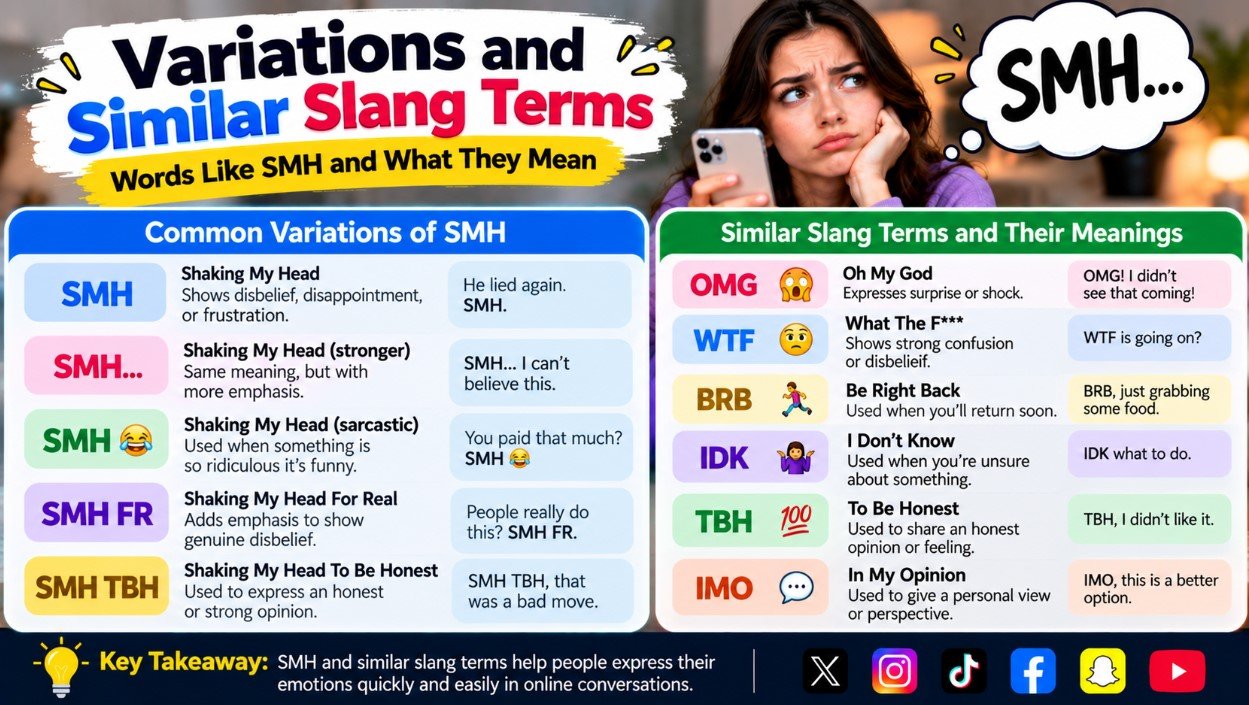
As with all language, internet acronyms evolve. Once people understood the basic smh meaning, they began modifying it to express stronger emotions.
SMDH (Shaking My Damn Head)
When a standard head shake is not enough to convey your frustration, users add an expletive for emphasis. SMDH stands for “shaking my damn head.” You use this variation when a situation moves past mild annoyance and into outright anger or shock.
Other related terms include:
- SMH TBH: Shaking my head, to be honest.
- SMFH: Shaking my f***ing head (for extreme disbelief).
Comparison: SMH vs. Facepalm
People often confuse the smh meaning with the concept of a “facepalm.” While they share similarities, they convey slightly different nuances.
| Feature | SMH (Shaking My Head) | Facepalm 🤦 |
| Core Emotion | Disappointment, disapproval, disbelief | Stupidity, extreme exasperation, regret |
| Target | Usually directed at someone else’s actions | Often directed at oneself or an obvious error |
| Visual Cue | Slow side-to-side head movement | Slapping one’s forehead with an open palm |
| Best Used When | You read a bad opinion online | Someone asks a painfully obvious question |
The Psychology Behind Digital Disapproval
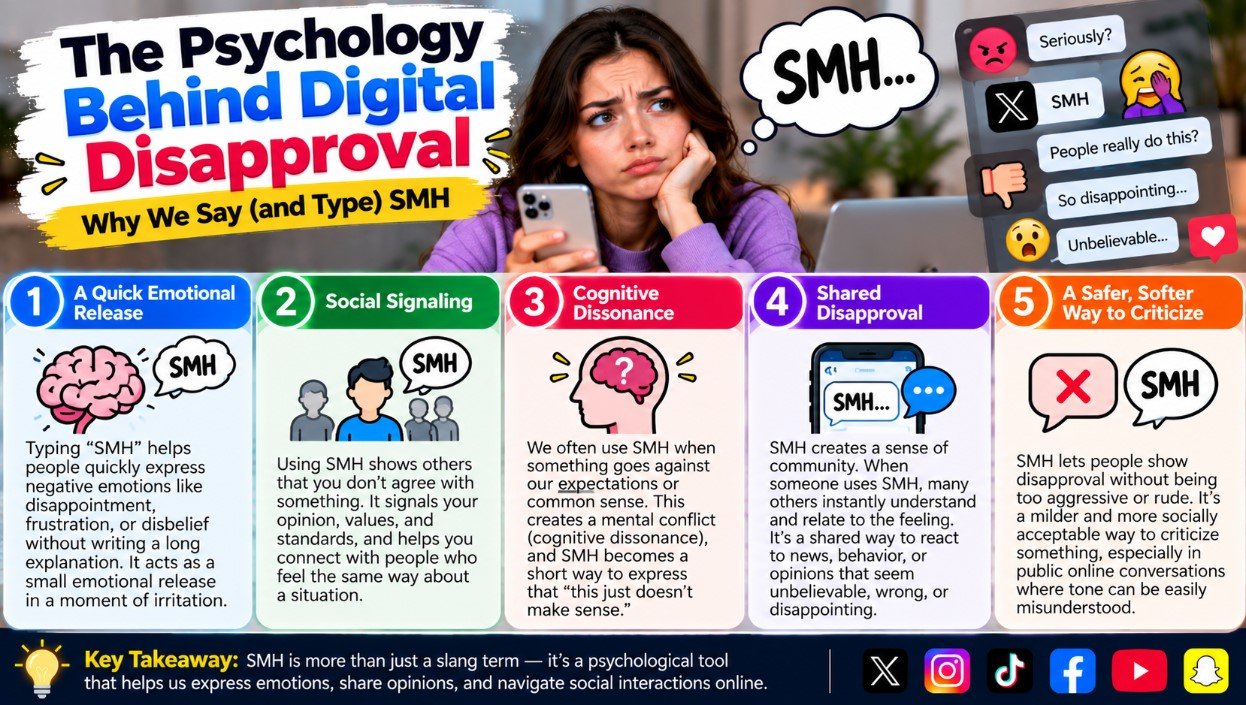
Why did the smh meaning become so popular? The answer lies in psychology and human behavior.
Humans are incredibly visual creatures. Experts suggest that up to 70% of human communication is non-verbal. When we transitioned to texting and social media, we lost the ability to read facial expressions, vocal tone, and body language.
Acronyms bridge this digital communication gap. Using the smh meaning provides a psychological shortcut. It signals empathy, judgment, or shared values without requiring a lengthy explanation. When you text this term, you are essentially saying, “I see the problem here, and I validate that it is ridiculous.”
Generational Differences in Internet Slang
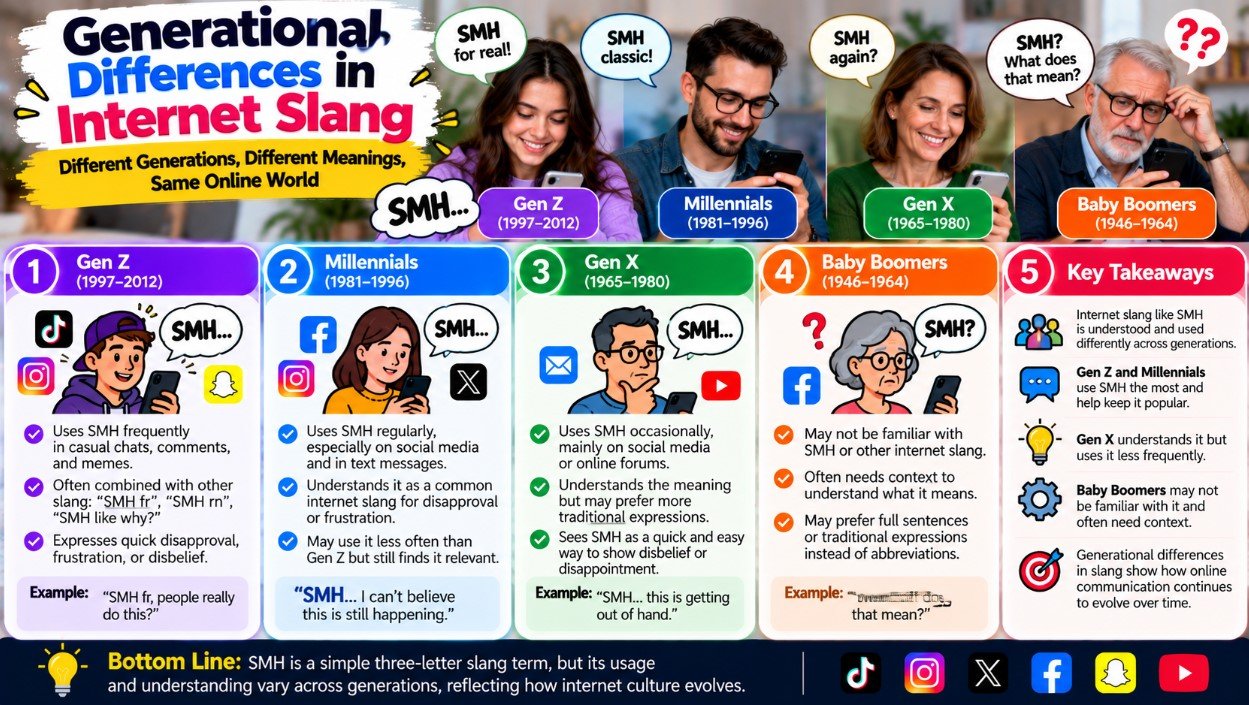
The way different age groups interpret the smh meaning highlights the fascinating evolution of digital language.
- Baby Boomers: Often unfamiliar with the term. They might mistake the smh meaning for phrases like “so much hate” or “somehow.”
- Millennials: The pioneers of the acronym. Millennials use it naturally in texts and social media, often in lowercase (smh).
- Gen Z: While Gen Z understands the smh meaning, they often prefer using visual media like TikTok reaction videos, sticker packs, or specific emojis (like the skull emoji 💀) to express similar feelings of disbelief.
Click Now: Fascist Meaning
Pros and Cons of Using Internet Slang
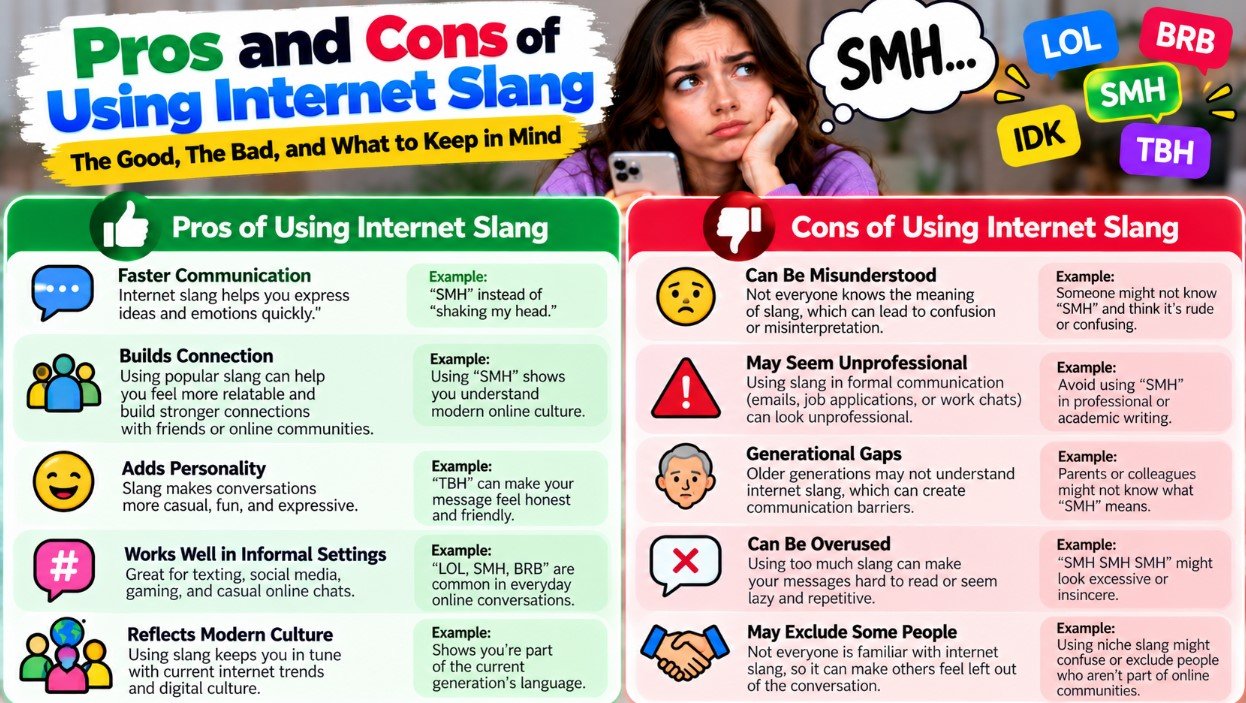
Integrating abbreviations into your daily vocabulary comes with distinct advantages and disadvantages.
Pros
- Efficiency: Saves typing time, especially on mobile devices.
- Emotional Clarity: Quickly clarifies the tone of a message that might otherwise seem neutral.
- Inclusivity: Shows you belong to a specific online community or share a modern communication style.
Cons
- Miscommunication: Older generations might misinterpret the smh meaning.
- Informality: Can appear unprofessional in serious contexts.
- Overuse: Using it too often can make your writing feel lazy or uninspired.
Workplace Etiquette: Is SMH Professional?
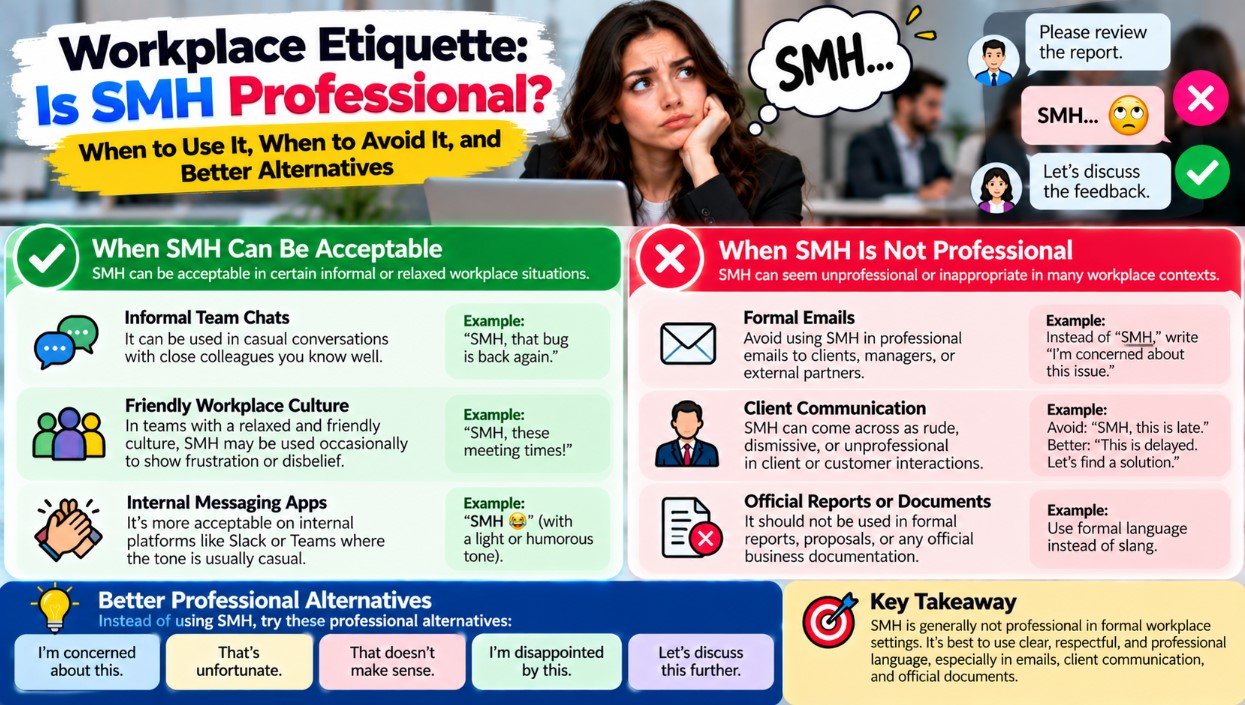
A common question regarding digital communication is whether you can use acronyms at work. The short answer is: proceed with caution.
While the smh meaning is harmless in a group chat with friends, it rarely belongs in a professional email. If a vendor misses a deadline, replying with “smh” comes across as passive-aggressive and unprofessional.
However, modern workplaces rely heavily on platforms like Slack or Microsoft Teams. In these casual, internal chat environments, using the acronym with close colleagues might be acceptable, provided your company culture leans casual. When in doubt, spell out your thoughts professionally.
Real-Life Examples and Scenarios
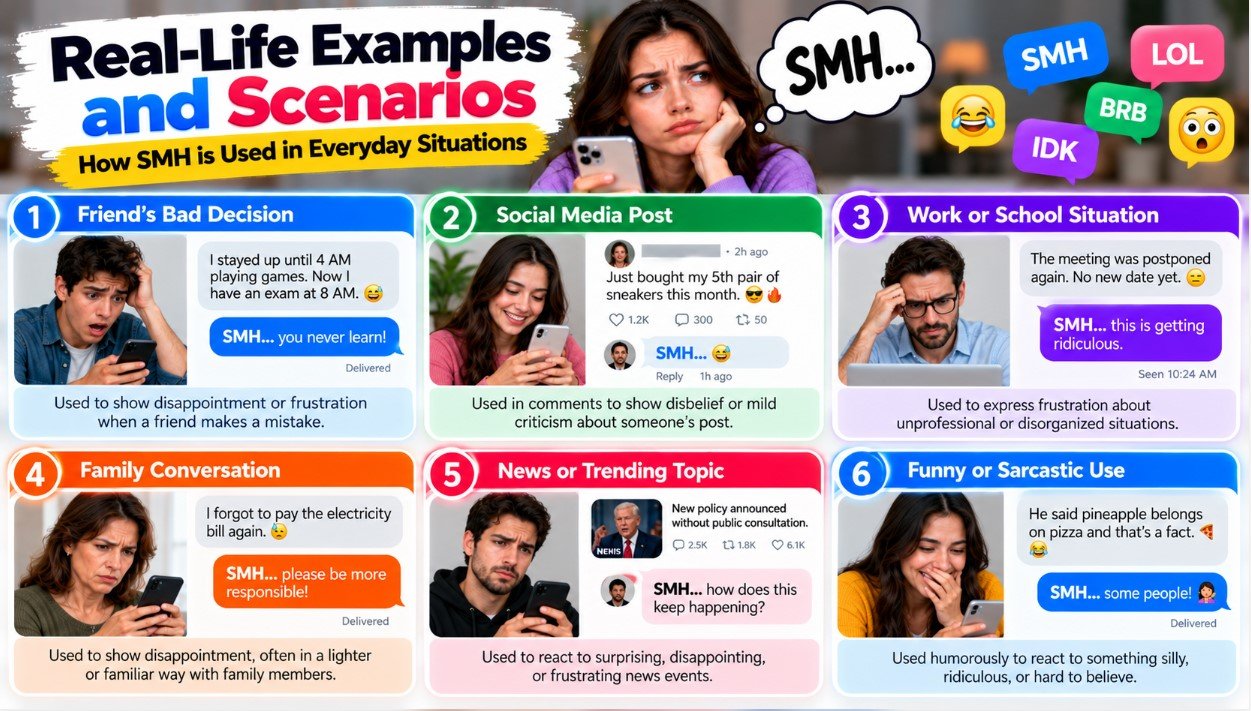
To cement your understanding of the smh meaning, let’s look at a few practical examples of how it naturally appears in text messages.
Example 1: The Frustrated Sports Fan
Person A: “Did you see the quarterback throw that interception in the final minute?”
Person B: “Yeah, right into double coverage. Smh.”
Example 2: The Exasperated Parent
Person A: “My teenager just asked me what a landline is.”
Person B: “Wow. I feel so old right now. SMH.”
Example 3: Everyday Annoyances
Person A: “The coffee shop got my order wrong for the third day in a row.”
Person B: “You need to find a new coffee shop smh.”
Click Here: 67 Meaning
Frequently Asked Questions (FAQ)
1. What is the exact smh meaning?
The exact smh meaning is “shaking my head.” It is used to express disappointment, disbelief, or disapproval in text-based communications.
2. Does the smh meaning ever stand for “so much hate”?
No. While some internet users mistakenly believe the smh meaning is “so much hate,” this is a common misconception. The established definition is always “shaking my head.”
3. Is it better to capitalize SMH or write it in lowercase?
Both are acceptable. Capitalizing (SMH) often implies a stronger emotion or yelling, while lowercase (smh) indicates a more casual, tired, or subtle disappointment.
4. When was the smh meaning first used?
The acronym first gained traction in early internet chat rooms in the early 2000s and was officially added to online slang dictionaries around 2004.
5. How do you reply to someone who texts SMH?
You can reply by agreeing with their frustration (e.g., “I know, right?”), offering a solution, or simply sending a corresponding emoji like the facepalm or an eye-roll.
6. Can I use the smh meaning in a business email?
It is highly recommended to avoid internet slang in formal business emails. It can appear unprofessional and passive-aggressive to clients or management.
7. What does SMDH mean compared to the standard smh meaning?
SMDH stands for “shaking my damn head.” It is an intensified version of the original acronym, used when someone is exceptionally angry or shocked.
8. What emoji best represents the smh meaning?
The person facepalming (🤦), the eye-roll emoji (🙄), or the traditional disappointed face (😞) best represent the visual equivalent of shaking your head.
Conclusion
Understanding the smh meaning gives you a valuable key to decoding modern internet culture. What started as a simple chat room shortcut has blossomed into a universally recognized symbol of digital disappointment and disbelief.
Whether you are expressing frustration over a delayed flight, laughing at a ridiculous news story, or simply bantering with friends, knowing how to apply the smh meaning effectively improves your digital communication. By acting as a stand-in for real-world body language, this simple three-letter acronym helps us bring human emotion to the cold, digital screens we interact with every day.
The next time you see a text message that leaves you completely baffled, you will know exactly what to type back: smh.