
Nonchalant Meaning Explained: Psychology, Signs, and Real-Life Examples
Imagine walking into a high-pressure corporate meeting in Bengaluru, or watching a tense final over in an IPL cricket match. Everyone around is biting their nails, sweating, and pacing the floor. But one person sits there completely relaxed, sipping water, looking entirely unbothered by the chaos.
That person is displaying nonchalance.
If you have ever heard someone described as “nonchalant” and wondered what it actually implies, you are in the right place. In this comprehensive guide, we will break down the exact nonchalant meaning, explore its psychology, compare it with similar traits, and show you how to spot it in everyday life.
Let us dive right in.
What Is the Exact Nonchalant Meaning?

At its core, the nonchalant meaning revolves around a feeling of casual calmness. A nonchalant person appears completely relaxed and unconcerned, especially in situations where others might feel anxiety, excitement, or fear.
When you are nonchalant, you do not display strong emotions. You simply take things as they come. It is the ultimate state of being “cool, calm, and collected.”
Key synonyms include:
- Unconcerned
- Unbothered
- Indifferent
- Casual
- Relaxed
- Aloof
Key antonyms include:
- Anxious
- Frantic
- Enthusiastic
- Overwhelmed
- Hysterical
Someone can act nonchalant about a major life achievement, like getting a massive promotion, or they can act nonchalant about a crisis, like missing a flight.
To truly grasp the nonchalant meaning, we need to look at its roots.
Click Here: Pookie Meaning
The Origin: Where Did the Word Come From?

The word entered the English language around the 1730s. It comes directly from the Old French word nonchaloir, which means “to lack warmth” or “to not care.”
If we break the French word down further into its Latin roots:
- “Non” means not.
- “Calere” means to be warm or hot.
So, literally speaking, to be nonchalant means “not being hot-headed.” It describes someone who keeps their cool when the temperature in the room—metaphorically speaking—rises.
Nonchalant Meaning in Hindi and Indian Languages
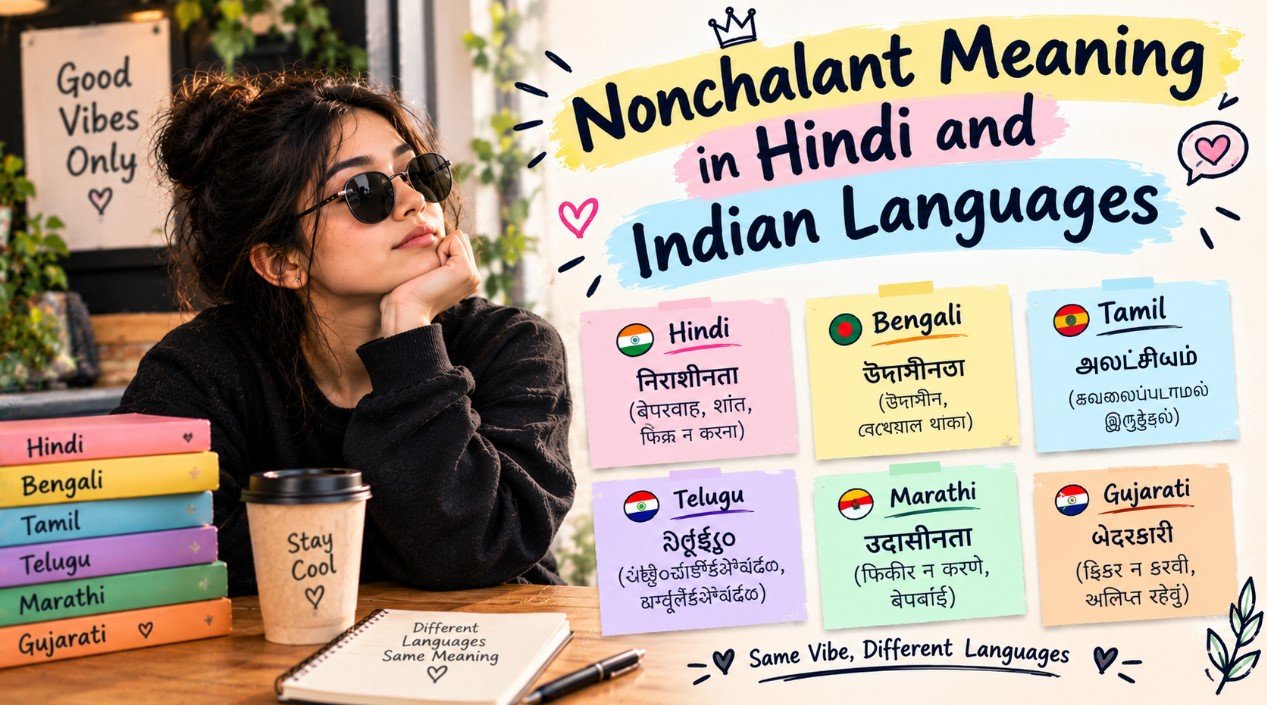
In a diverse country like India, understanding English vocabulary through the lens of regional languages helps solidify the concept.
If you are looking for the exact nonchalant meaning in Hindi, the closest translations are:
- बेपरवाह (Beparwah): Meaning careless or unconcerned.
- उदासीन (Udasin): Meaning indifferent or detached.
- शांत (Shant): Meaning calm and composed.
In everyday Hinglish conversations, you might hear someone say, “Usne itna bada loss face kiya, but he was so beparwah about it.” (He faced such a big loss, but he was completely nonchalant about it).
In other Indian languages:
- Tamil: அலட்சியமான (Alatchiyamāṉa)
- Telugu: నిర్లక్ష్యంగా (Nirlakṣyaṅgā)
- Marathi: बेफिकीर (Bephikīr)
Note: While many of these regional translations lean slightly toward “carelessness,” true English nonchalance is more about emotional calmness rather than irresponsibility.
How to Spot a Nonchalant Person: Key Characteristics
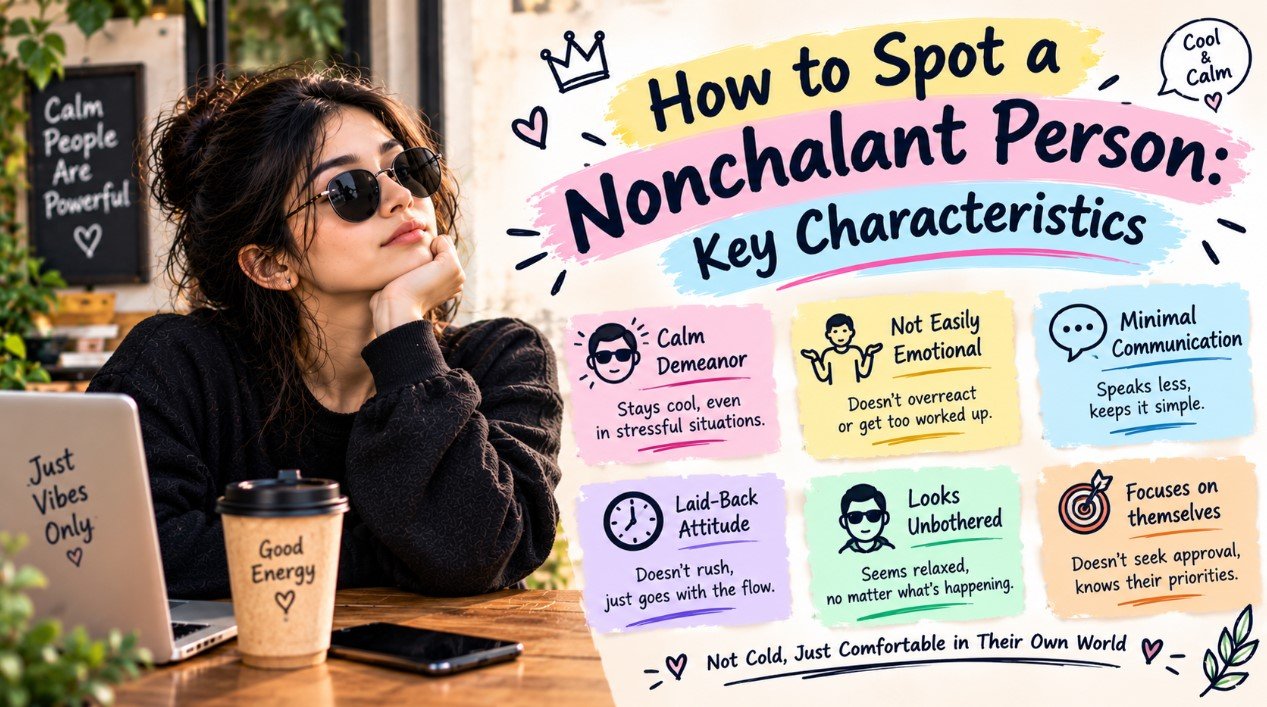
How do you know if someone is truly nonchalant? It usually comes down to three specific areas: body language, speech patterns, and emotional reactions.
1. Body Language Cues
Nonchalant individuals do not carry tension in their bodies.
- Relaxed Posture: They do not fidget, cross their arms tightly, or bounce their legs. They sit back comfortably.
- Steady Eye Contact: They look at you calmly without aggressively staring or nervously looking away.
- Neutral Facial Expressions: Their faces do not show dramatic shock, anger, or extreme joy.
2. Speech and Tone
You can hear nonchalance in how a person speaks.
- Even Pitch: Their voice does not jump up in octaves when they get surprised.
- Slower Pacing: They do not rush their words. They speak methodically.
- Brief Responses: They often use simple, direct phrases like, “That’s fine,” “No problem,” or “We’ll figure it out.”
3. Emotional Reactions
- Crisis Management: When a problem arises, they immediately look for a solution instead of panicking.
- Receiving Praise: When complimented, they simply say “Thank you” instead of boasting or acting overly humble.
Learn More: Vox Populi Vox Dei Meaning
The Psychology Behind Nonchalance

Why are some people naturally nonchalant while others panic over spilled milk? Psychologists suggest that nonchalance can stem from a few different mental frameworks.
Genuine Emotional Regulation
Some people possess high Emotional Intelligence (EQ). They have trained their brains to separate facts from feelings. When a stressful event happens, their amygdala (the brain’s fear center) does not hijack their logical thinking. They stay calm because they genuinely realize that panicking does not solve the problem.
Stoicism
Many nonchalant individuals unknowingly practice Stoicism. This ancient Greek philosophy teaches that you cannot control what happens to you; you can only control your reaction. By accepting this, these individuals naturally adopt a nonchalant attitude toward life’s chaotic events.
A Defense Mechanism
On the darker side, nonchalance is not always healthy. Sometimes, it is a psychological mask. People who have experienced trauma or intense stress might develop emotional detachment. They act unbothered to protect themselves from getting hurt or feeling overwhelmed. In psychology, this can sometimes overlap with avoidant coping patterns, although nonchalance alone does not establish an attachment style.
Comparison: Nonchalant vs. Apathetic vs. Arrogant
People often confuse these three traits. While they look similar on the surface, the internal motivations are entirely different.
Here is a clear comparison table to help you understand the nuances:
| Feature | Nonchalant | Apathetic | Arrogant |
|---|---|---|---|
| Core Meaning | Casually calm and relaxed. | Lacking interest or emotional engagement. | Believing you are better than others. |
| Internal Feeling | “I can handle this. Everything is fine.” | “I don’t care at all. What is the point?” | “This is beneath me. I am superior.” |
| How Others See It | Cool, composed, sometimes a bit aloof. | Disconnected or uninterested. | Rude, overly proud, and disrespectful. |
| Reaction to a Crisis | Stays calm and looks for a logical solution. | May show little interest in the crisis. | May blame others or act superior. |
| Impact on Others | Can calm people down in stressful times. | May frustrate people who need support. | May anger people due to a lack of respect. |
Pros and Cons of Being Nonchalant
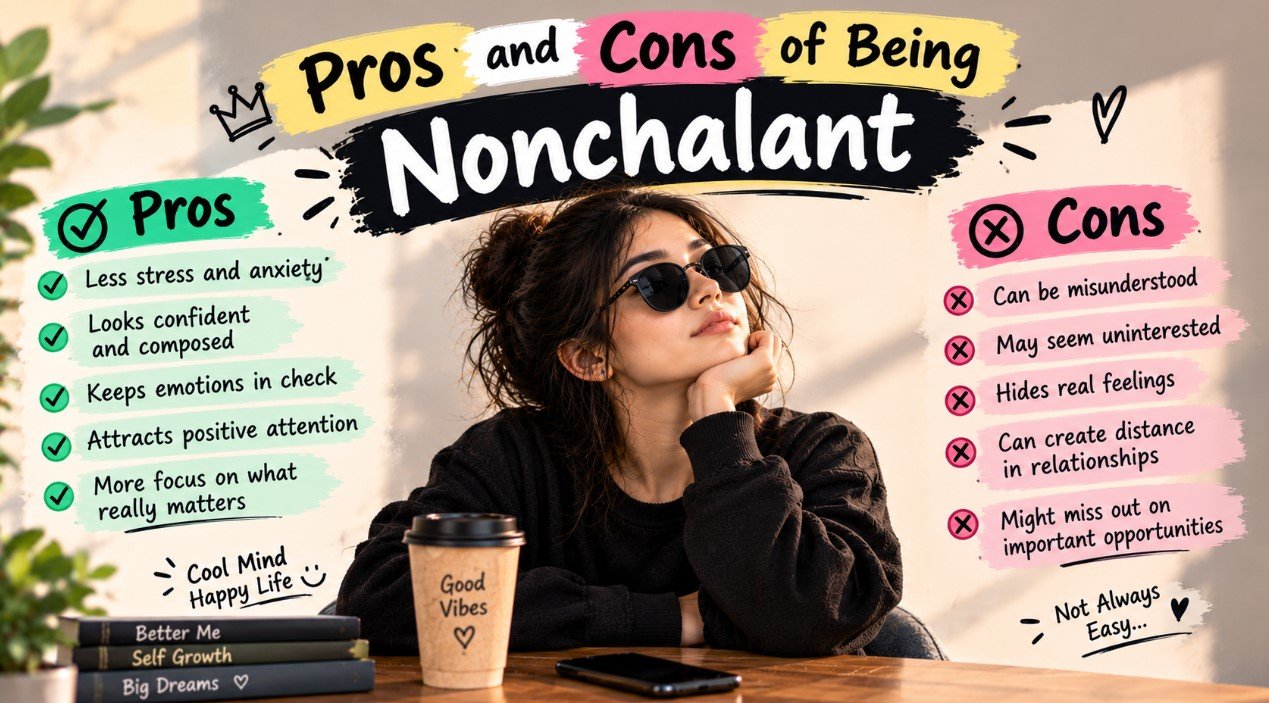
Like any personality trait, being nonchalant comes with its own set of advantages and disadvantages.
The Pros
- Excellent Stress Management: Nonchalant people may handle stressful situations calmly and avoid unnecessary panic.
- Clear Decision Making: Staying composed can help people make rational, effective decisions.
- De-escalating Conflicts: In an argument, a nonchalant response can sometimes defuse the other person’s anger. It is hard to maintain an argument when neither person is escalating it.
- Aura of Confidence: Society often views nonchalance as a sign of self-assurance.
The Cons
- Appearing Uncaring: In romantic relationships, a nonchalant partner can seem cold or uninvested, leading to friction.
- Missing Out on Joy: If you suppress negative emotions to stay calm, you might accidentally suppress positive emotions, making it hard to celebrate big wins.
- Perceived Laziness: In a fast-paced workplace, a boss might mistake a nonchalant employee’s calmness for a lack of drive or ambition.
Click Now: What is DEI Meaning
Famous Examples of Nonchalance in India
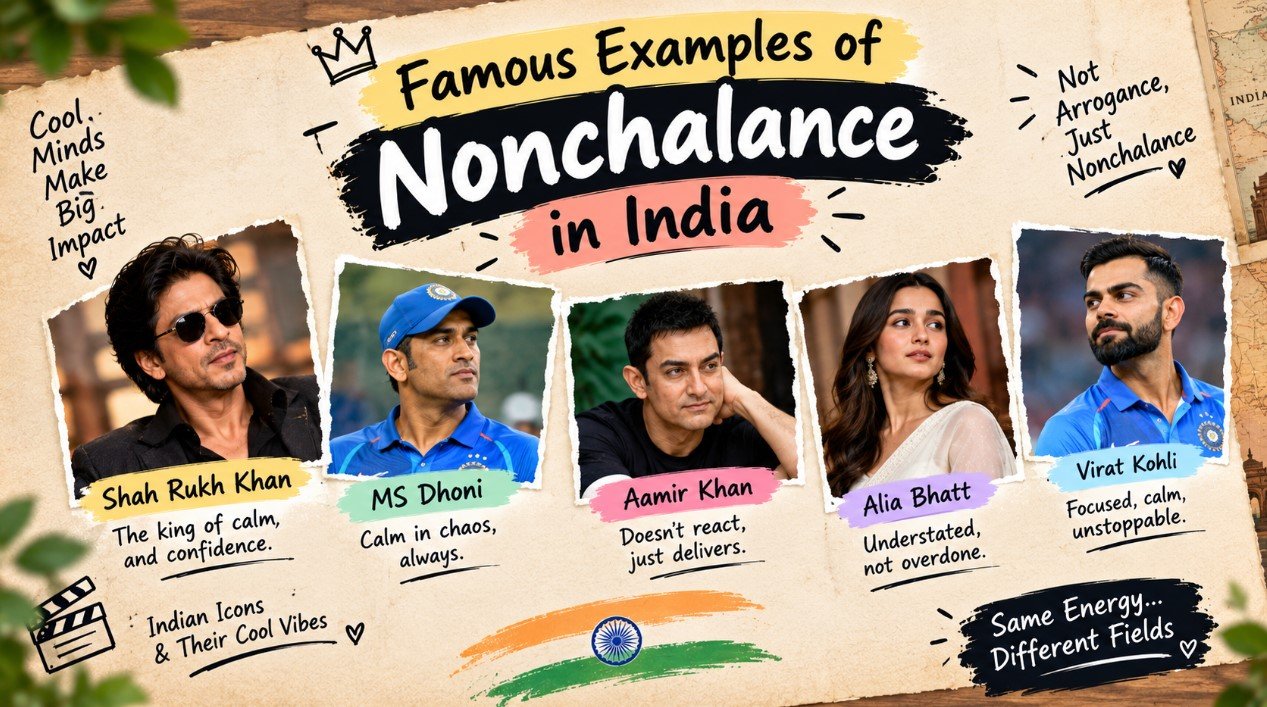
To truly contextualize the nonchalant meaning for an Indian audience, let us look at real-world examples.
1. MS Dhoni (Cricket)
Mahendra Singh Dhoni, famously known as “Captain Cool,” is a familiar example of nonchalance in Indian cricket. Whether India needed 15 runs off the last over or the team faced a difficult match situation, Dhoni often appeared composed under pressure. His calm demeanor became an important part of his public image.
2. Irrfan Khan (Bollywood)
The late actor Irrfan Khan was known for his understated acting style. Unlike performers who rely on loud dialogue delivery and exaggerated expressions, Khan often delivered powerful lines with casual, controlled ease. His characters frequently felt grounded and unfazed.
3. Ratan Tata (Business)
In the corporate world, Ratan Tata was widely associated with quiet leadership. His public demeanor was often measured and composed, reflecting a leadership style that emphasized thoughtfulness rather than unnecessary drama.
How to Use “Nonchalant” in a Sentence
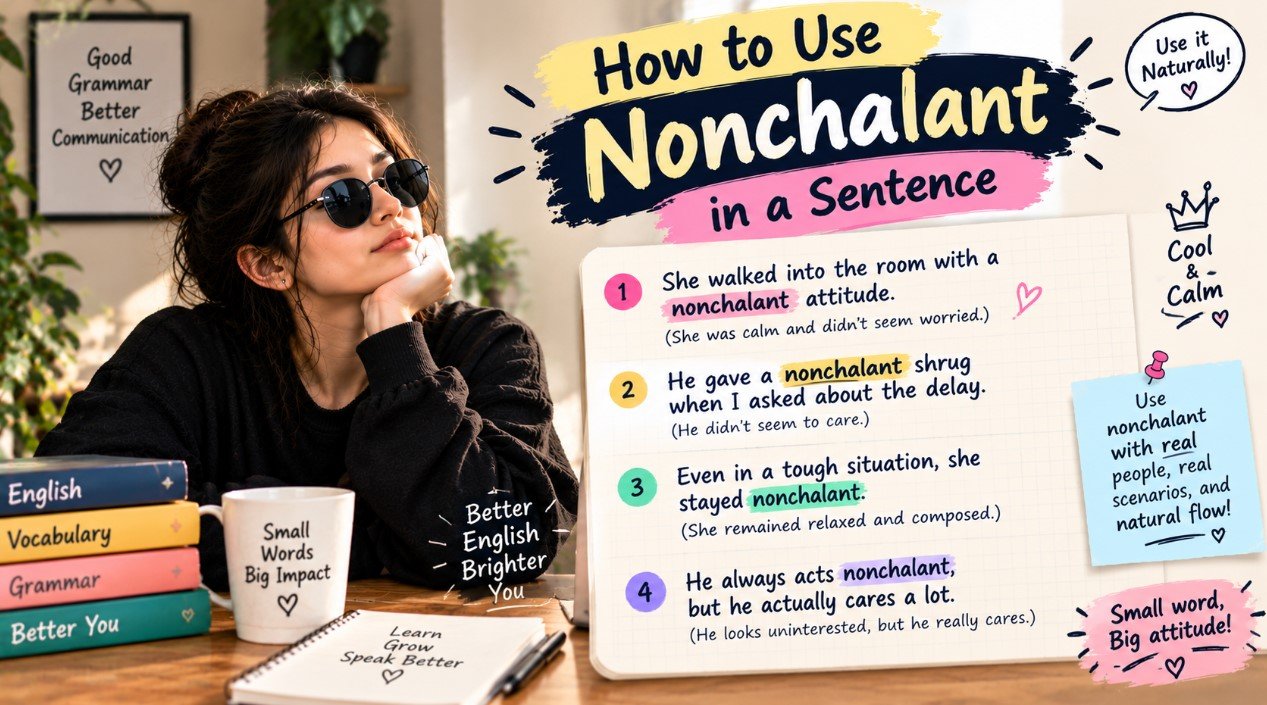
Understanding a word is one thing; using it correctly in writing and conversation is another. Here are various examples of how to naturally use “nonchalant” in a sentence.
In a Workplace Context
- “Despite the server crashing an hour before the launch, the IT manager remained completely nonchalant and fixed the code.”
- “She gave a nonchalant shrug when they asked if she was worried about the upcoming performance review.”
In a Social or Casual Context
- “He walked into the party with a nonchalant attitude, pretending he didn’t care that his ex was there.”
- “I tried to act nonchalant when I met my favorite celebrity, but my hands were shaking.”
In a Sports Context
- “The striker took the penalty kick in a surprisingly nonchalant manner, lightly tapping the ball into the net.”
Nonchalance in Modern Gen Z Slang
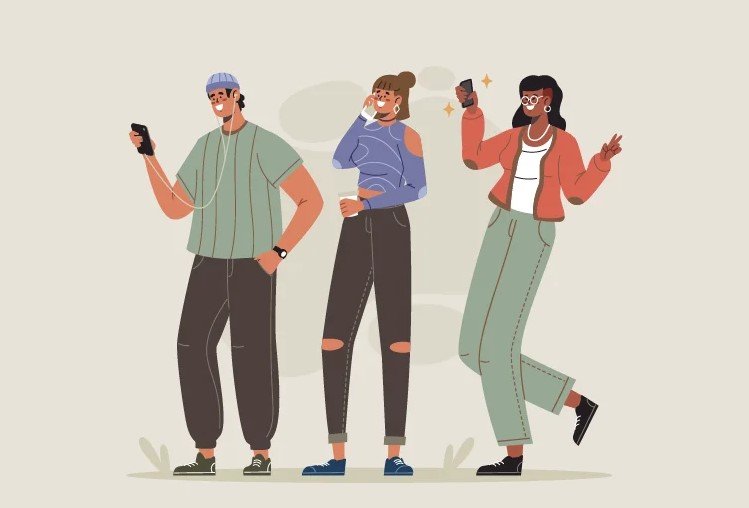
Language evolves, and the youth have embraced the concept of nonchalance, rebranding it for social media platforms like Instagram and YouTube.
If you spend time online, you will notice that being nonchalant is currently trendy in some online communities. It ties into several modern slang terms:
- “Unbothered”: This is the modern Gen Z equivalent of nonchalant. Someone who is “unbothered” refuses to let internet drama affect their real life.
- Main Character Energy: The idea that you are the star of your own movie. Main characters do not stress over minor inconveniences; they stay cool.
- The “Sigma” Mindset: In internet culture, a “Sigma” is often portrayed as someone who does their own thing without needing applause or social validation.
For the younger generation, portraying a nonchalant aesthetic online—posting casual photo dumps without heavy editing or using simple, lowercase captions—can signal an effortless style. It communicates the impression, “I didn’t have to try hard to look this good.”
Frequently Asked Questions (FAQs)
Here are some of the most commonly asked questions regarding the nonchalant meaning.
1. Is being nonchalant a good or bad thing?
It depends entirely on the situation. It is useful in an emergency where clear thinking is required. However, it can be a problem if your partner is looking for emotional support and you act entirely detached.
2. Can you train yourself to be nonchalant?
Yes. You can develop a calmer response by practicing mindfulness, pausing before reacting to bad news, and learning basic Stoic philosophy. Breathing exercises may also help you manage stress.
3. What is the difference between nonchalant and ignorant?
An ignorant person lacks knowledge or awareness of relevant facts. A nonchalant person may know exactly what is going on but choose not to show a strong emotional reaction.
4. How do you deal with a nonchalant partner?
Communication is key. Tell them directly that their lack of visible emotion makes you feel unheard. Understand that their calmness may be how they process information, rather than a sign that they do not love you.
5. What is the exact opposite of nonchalant?
The opposite of nonchalant includes words like frantic, hysterical, anxious, panicky, or overly agitated.
6. Does nonchalant mean lazy?
No. A person can work long hours and be incredibly successful while maintaining a nonchalant attitude. It is about outward composure, not physical effort.
7. Is MS Dhoni really a nonchalant person?
MS Dhoni is widely regarded as an example of composure under pressure in Indian sports. However, his public image alone cannot tell us exactly how he feels internally.
8. Can I use nonchalant as an adverb?
The adverb form is nonchalantly. For example: He nonchalantly tossed his keys onto the table.
9. Is nonchalance a coping mechanism?
It can be. Some individuals hide or suppress their emotions to avoid dealing with pain or stress, using an unbothered exterior as a shield. However, not all nonchalance is a coping mechanism.
10. How do I pronounce nonchalant?
It is commonly pronounced non-shuh-LAHNT, with the stress on the final syllable.
Conclusion
Understanding the nonchalant meaning gives you a powerful tool in your vocabulary. It is more than just a synonym for “calm.” It represents a specific type of unbothered, casual ease that can be useful in high-stress situations.
Whether you are admiring the composure of athletes like MS Dhoni, trying to navigate workplace politics without losing your temper, or just wanting to understand modern Gen Z internet culture, nonchalance is everywhere.
The key takeaway? Strive to cultivate healthy nonchalance. Use it to protect your peace of mind and make rational decisions during a crisis, but remember to let your guard down and show enthusiasm when life brings you moments worth celebrating.
By mastering the balance between caring deeply and acting casually, you can navigate life’s ups and downs with grace.