Body Count Meaning: What It Really Means in Slang, Dating, and Modern Relationships
Have you recently scrolled through Instagram Reels, watched a TikTok, or sat at a cafe in Mumbai and heard someone ask, “What is your body count?” If you are confused, you are not alone.
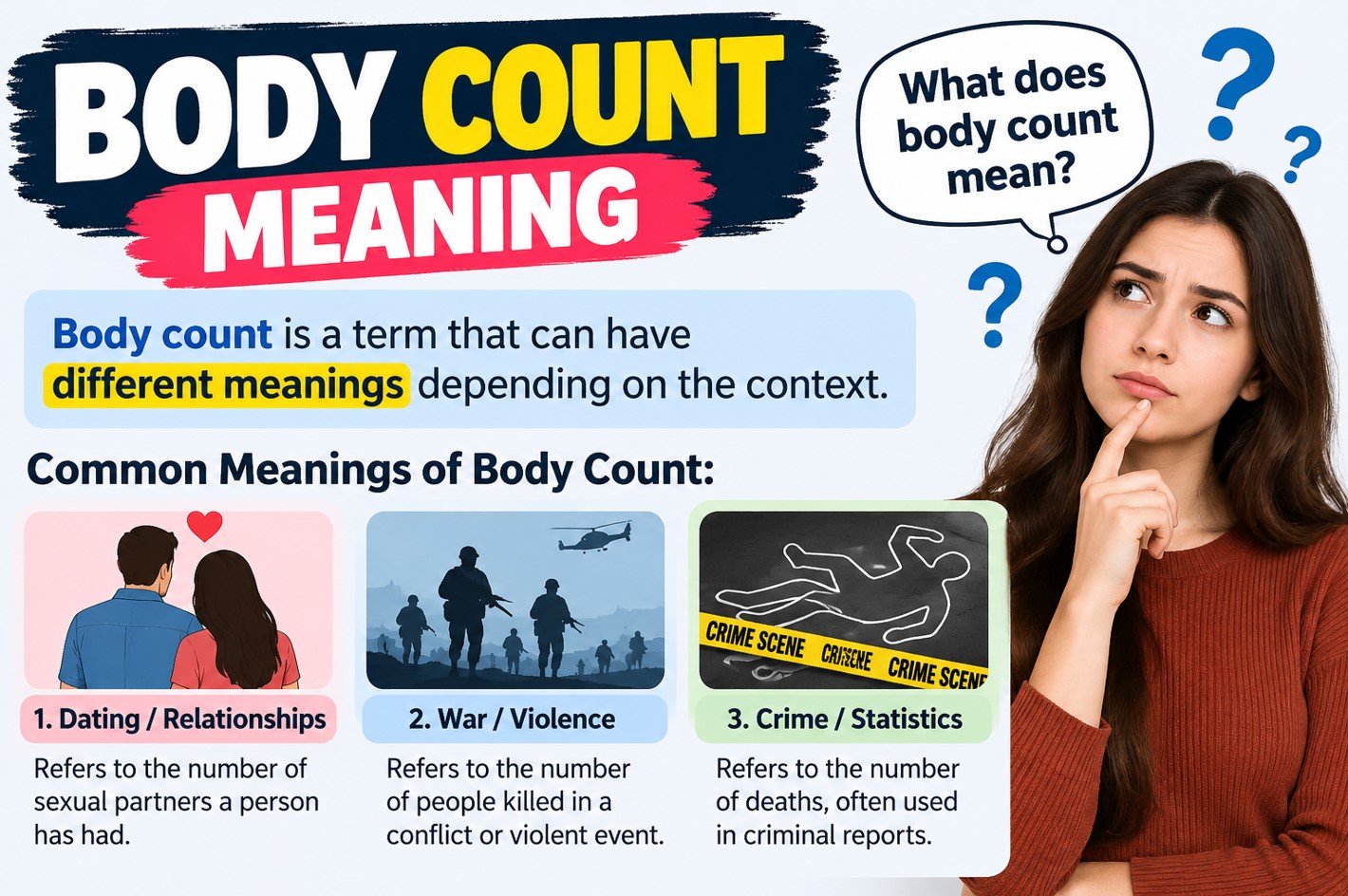
Language evolves rapidly. A phrase that once belonged strictly to news reports and history books has now become one of the most debated topics in modern romance. Today, the body count meaning has split into two entirely different worlds: the literal battlefield and the modern dating scene.
In this comprehensive guide, we will break down exactly what this term means today, how it transitioned into Indian pop culture, the psychology behind why people ask it, and whether you should actually share your number with a new partner.
What is the Exact “Body Count” Meaning?
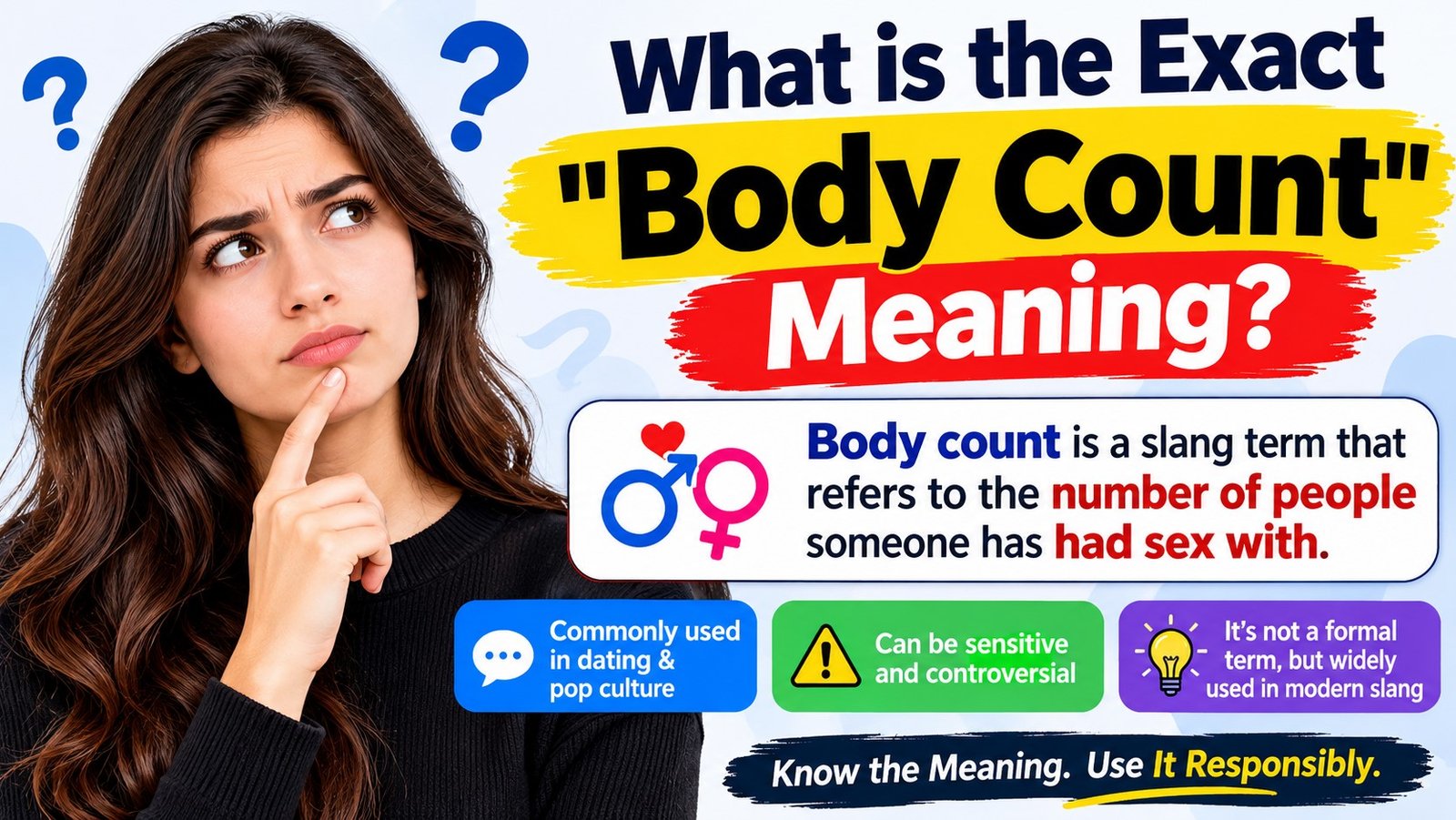
To fully understand this phrase, we have to look at its two distinct definitions. The context in which you hear the phrase completely changes its definition.
The Modern Slang Definition (Dating & Relationships)
In today’s pop culture, especially among Gen Z and Millennials, your “body count” refers to the total number of sexual partners you have had in your lifetime.
If someone on a dating app like Tinder or Bumble asks for your number, they are not talking about crime. They are asking about your intimate history. This slang has become a casual, though often controversial, way to gauge someone’s dating past, sexual experience, and relationship values.
The Traditional and Historical Definition
Before social media changed our vocabulary, the term had a much darker, literal meaning. Historically, a body count refers to the total number of people killed in a specific event.
You will still hear journalists and historians use this term when reporting on:
- Military casualties during a war.
- Victims of a natural disaster (like an earthquake or flood).
- The number of victims attributed to a serial killer.
Because of this dual meaning, using the phrase out of context can lead to highly awkward—or alarming—misunderstandings.
Click Here: What is DEI Meaning?
How a Military Term Became Dating Slang
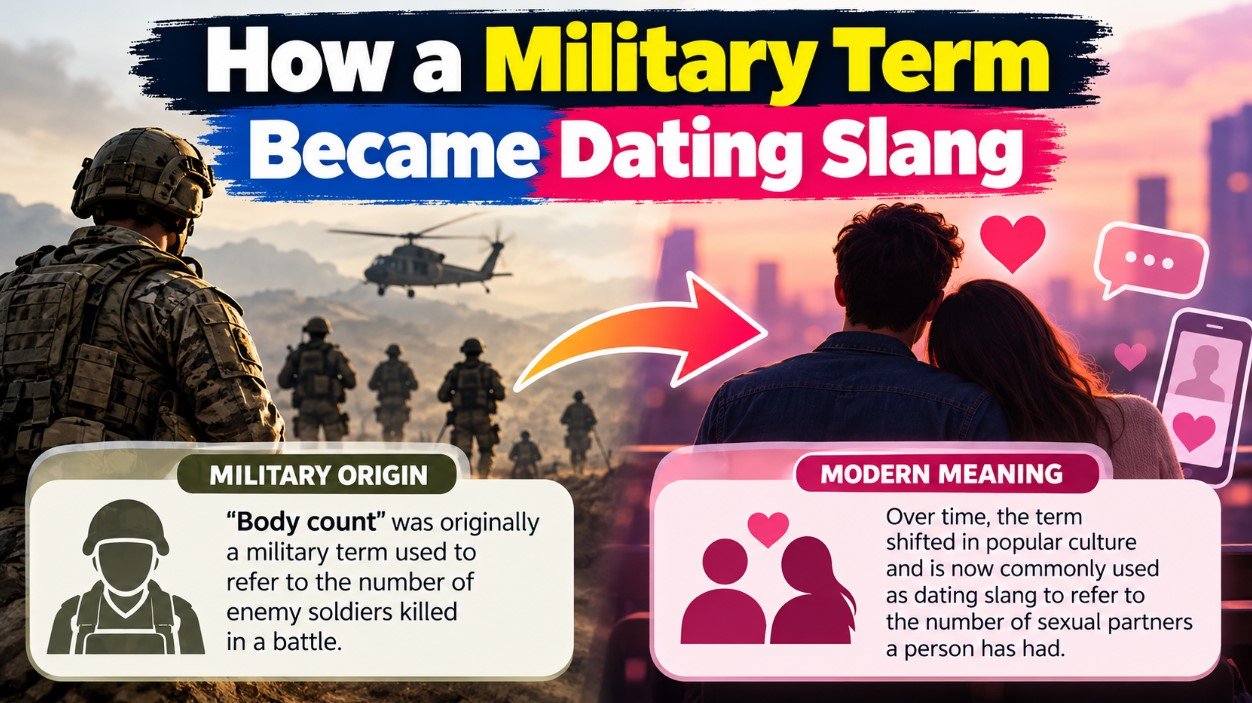
You might wonder how a phrase associated with war casualties became a trendy topic on dating podcasts. The evolution of language is deeply tied to music and internet culture.
Hip-Hop and Pop Culture Influence
The linguistic shift began in Western pop culture, specifically within hip-hop and rap music during the 1990s and 2000s. Rappers often used aggressive, hyper-masculine metaphors to describe their romantic conquests. Treating dating like a “conquest” or a “battle” naturally led to the adaptation of military terms.
Over time, bragging about a high number of romantic partners morphed into the phrase we use today.
Social Media and Gen Z Adoption
While music planted the seed, social media accelerated the trend. Platforms like TikTok, YouTube Shorts, and Instagram Reels feature thousands of street interview videos. Content creators frequently walk up to strangers with a microphone and ask, “What is your body count?”
These viral videos generate massive engagement because the question forces a quick, often embarrassing confession. As these videos flooded the internet, the phrase naturally slipped into everyday vocabulary worldwide, including the urban centers of India.
The “Body Count” Debate: What Actually Counts?
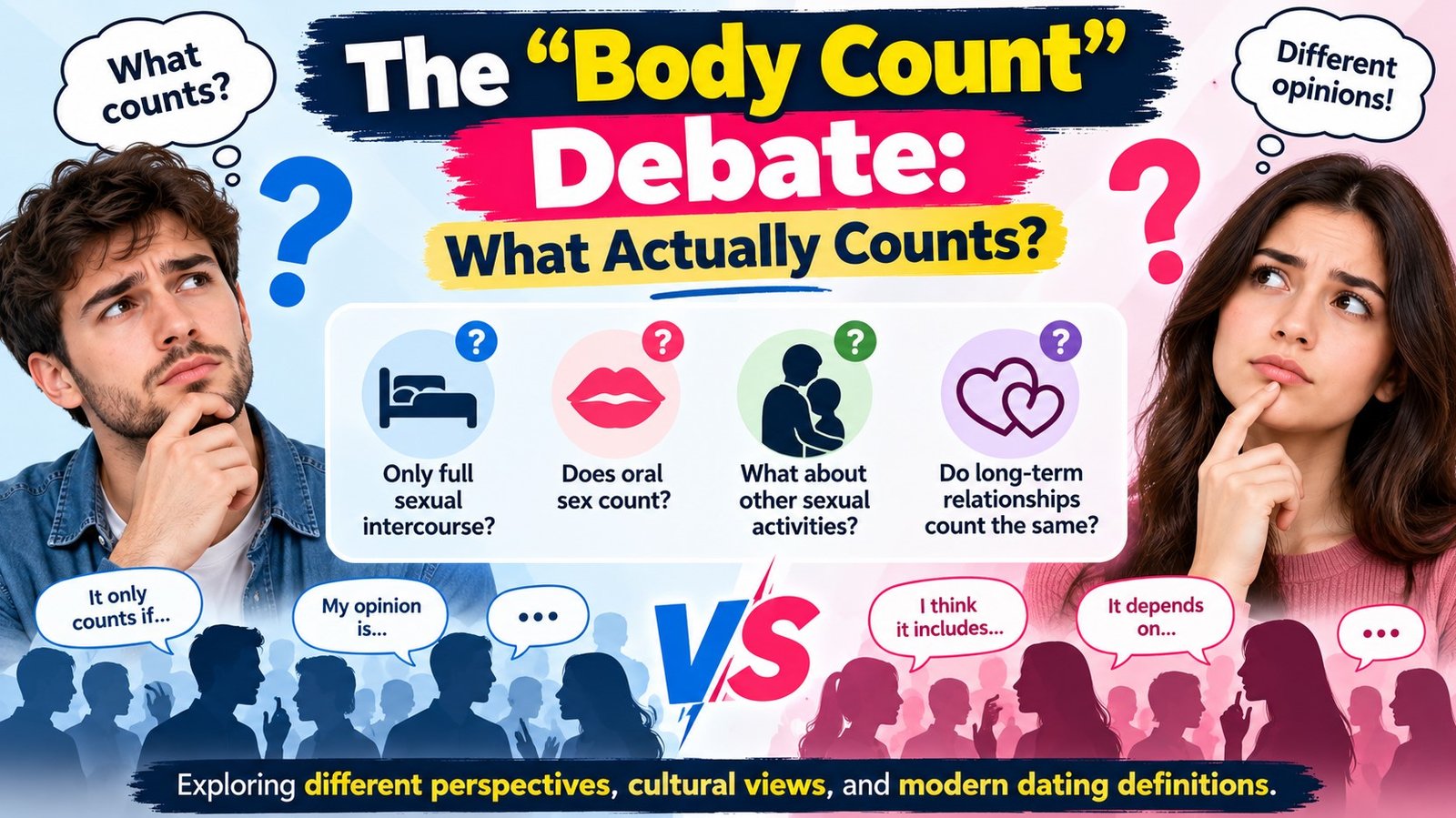
Even within the modern slang definition, there is massive confusion about what exactly constitutes a “body.” Because sexual intimacy exists on a wide spectrum, different people have completely different rules for tallying their number.
The Traditional View
For many, a person is only added to the count if penetrative intercourse occurred. This is the most widely accepted baseline. If this boundary was not crossed, the number does not go up.
The Nuanced View
However, modern intimacy is not always black and white. Many young adults argue that oral intimacy or heavy foreplay should also count, as these acts involve significant physical vulnerability and emotional connection. Furthermore, for members of the LGBTQ+ community, the definition of consummation varies, meaning the “rules” of the body count are highly subjective.
Ultimately, there is no universal rulebook. The meaning depends entirely on an individual’s personal definition of physical intimacy.
Body Count in Indian Dating Culture
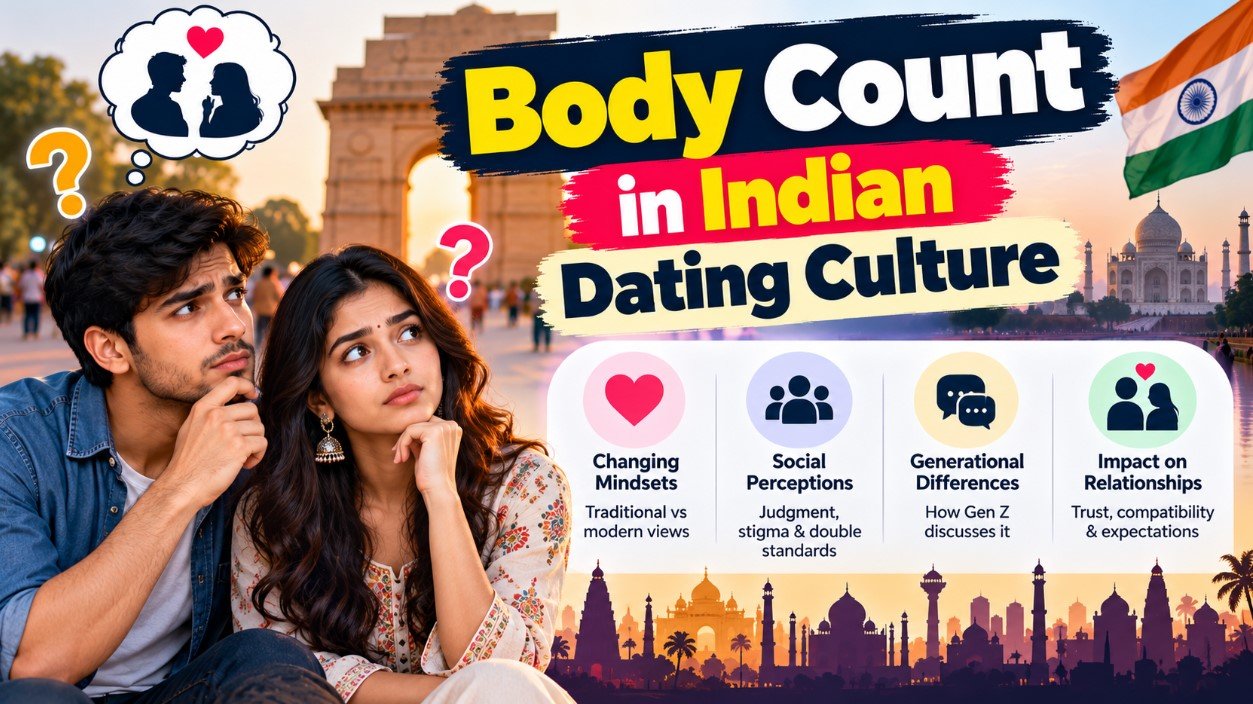
India is currently experiencing a massive cultural shift. We are standing at the intersection of traditional family values and hyper-modern global dating trends. This clash makes the body count conversation in India particularly complicated.
Arranged Marriages vs. Modern Dating
Historically, the concept of a “dating history” was virtually non-existent in traditional Indian society, where arranged marriages were the absolute norm. Purity and lack of past relationships were historically prioritized.
Today, young adults in metropolitan cities like Delhi, Mumbai, and Bengaluru navigate a completely different reality. They use international dating apps, engage in casual dating, and have relationship histories before marriage. The collision of these two worlds means that asking about past partners carries much heavier cultural baggage in India than it might in Western countries.
The Impact of Dating Apps
With the rise of Bumble, Hinge, and Tinder in India, casual dating has become normalized among young professionals. Consequently, the topic of past intimacy surfaces much faster in getting-to-know-you conversations.
However, many Indian millennials and Gen Z individuals still feel the pressure of societal judgment. Disclosing a high number might trigger traditional moral judgments, while disclosing a zero might lead to insecurities about being “inexperienced.”
The Psychology: Why Do Partners Ask?

If asking the question causes so much anxiety, why do people ask it? Psychologists suggest that the urge to know a partner’s romantic history stems from several deep-rooted emotional drivers.
1. Seeking Emotional Safety and Trust
Sometimes, people ask because they want to understand your relationship style. They believe that your past behavior is a roadmap to your future behavior. A person looking for a serious, long-term commitment might feel anxious if their partner has a history of purely casual, fleeting encounters.
2. Retroactive Jealousy
Retroactive jealousy is a psychological condition where a person becomes obsessively jealous of their partner’s past romances, even though those events happened long before they met. People suffering from this often ask for a number compulsively, seeking reassurance. Unfortunately, hearing the actual number usually makes their anxiety worse, not better.
3. Values Alignment
For some, the question is simply a compatibility test. They want to ensure their partner views physical intimacy through the same lens. If one person views intimacy as a deeply spiritual, rare connection, and the other views it as a fun, casual weekend activity, the clash in values could cause long-term relationship friction.
Learn More: Pookie meaning
The Double Standard: Men vs. Women

It is impossible to discuss the body count meaning without addressing the glaring societal double standard that still exists, heavily so in conservative cultures.
The “Player” vs. The Stigma
Societal conditioning has long praised men for having a high number of partners. A man with a high count is often socially rewarded by his peers and labeled a “player” or a “stud.” His experience is viewed as a badge of masculinity.
Conversely, women face severe societal stigma for the exact same behavior. A woman with a high number is frequently subjected to slut-shaming and harsh moral judgments. Society unfairly labels her as “easy” or “damaged.”
The Shifting Tides
Thankfully, mental health awareness and feminist movements are actively dismantling this toxic double standard. Modern relationship experts emphasize that your worth is not tied to your dating history, regardless of your gender. A healthy relationship requires mutual respect, not moral policing of a person’s past.
Pros and Cons of Revealing Your Body Count

Should you actually answer the question when your partner asks? There is no legal obligation to share your past. It is entirely your choice. Here is a breakdown to help you decide.
Pros of Sharing
- Radical Honesty: Sharing your past builds a foundation of complete transparency.
- Weeds out Judgmental Partners: If someone judges you harshly for your past, they are likely not a compatible long-term match. Sharing early can act as a great filter.
- Promotes Sexual Health Conversations: Discussing past partners naturally leads to important conversations about STD testing and safe sex practices.
Cons of Sharing
- Triggers Insecurity: Once a number is spoken, it cannot be unheard. It often triggers retroactive jealousy that can slowly poison a healthy relationship.
- Unfair Judgment: You may be stereotyped or judged based on an arbitrary number rather than who you are today as a person.
- It Does Not Define You: Your past does not dictate your present ability to love, be faithful, and build a healthy future.
How to Handle the Body Count Conversation
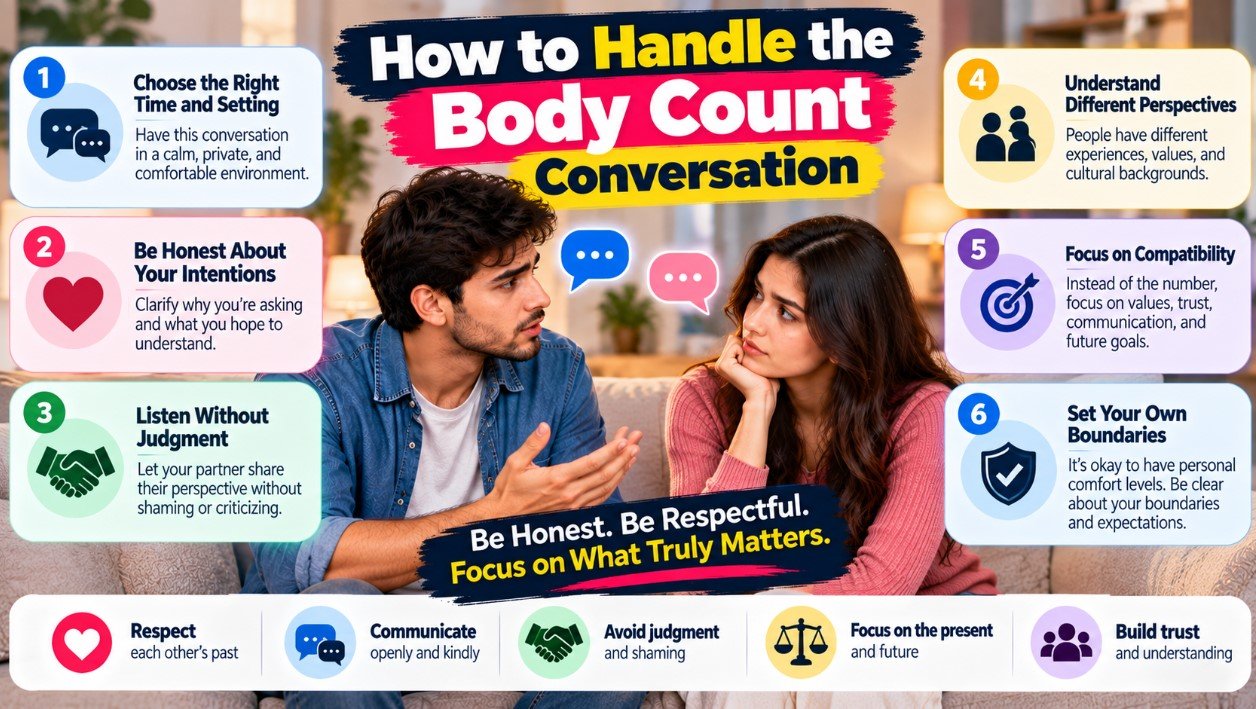
If you find yourself on a date and the dreaded question pops up, you need a strategy. You do not have to answer if you feel uncomfortable. Here is how you can handle the situation gracefully.
1. Set Firm Boundaries
If you believe that your past is strictly your business, say so confidently. You can set a boundary without being rude.
- Example response: “I don’t really focus on numbers. I prefer to leave the past in the past and focus on the connection we are building right now.”
2. Shift the Focus to Health
If you want to dodge the specific number but address the underlying concern (which is often about safety), pivot the conversation to health.
- Example response: “I don’t discuss my exact history, but if you are asking about health, I take my sexual health seriously and get tested regularly.”
3. Ask for Their Motivation
Before you answer, politely challenge the question to understand why they are asking.
- Example response: “That is a pretty personal question. What makes you curious about that?”
Their answer will tell you a lot about their emotional maturity.
Traditional vs. Modern Meaning (Comparison Table)
To make things perfectly clear, here is a quick visual breakdown of how this phrase is used in different contexts today.
| Feature | Traditional Meaning | Modern Slang Meaning |
| Primary Definition | Number of fatalities in an event. | Number of past sexual partners. |
| Common Context | War, natural disasters, true crime. | Dating apps, relationships, social media. |
| Who Uses It? | Historians, journalists, police. | Gen Z, millennials, internet influencers. |
| Emotional Tone | Tragic, objective, serious. | Casual, curious, often controversial. |
| Synonyms | Casualties, death toll, fatalities. | Intimate history, partner count. |
Frequently Asked Questions (FAQs)
1. Is it a red flag if a guy asks for my body count?
It is not automatically a red flag, as he might just be curious or bad at making conversation. However, if he asks it very early (like on a first date) or gets angry if you refuse to answer, that is a major red flag indicating potential controlling behavior or insecurity.
2. Should I lie about my body count?
Lying is generally not recommended in relationships. If you feel pressured to lie to avoid judgment, you are likely with the wrong person. It is much better to politely refuse to answer than to build a relationship on a lie.
3. What is considered a “normal” body count?
There is no such thing as “normal.” A normal number for someone who prefers long-term, monogamous relationships might be 2 or 3. For someone who enjoys casual dating in a big city, 15 or 20 might be normal. Normality is subjective.
4. Does kissing count as a body count?
No. In modern slang, kissing, making out, or holding hands does not add to your number. The term is exclusively reserved for sexual intercourse or, in some personal definitions, heavy intimate acts.
5. Why is Gen Z so obsessed with this term?
Gen Z grew up with social media, where oversharing is normalized. Viral TikTok trends and street interviews have gamified the concept of dating history, making it a casual conversation starter rather than a taboo secret.
6. Do girls care about a guy’s body count?
Yes, many women do care. While society often focuses on men asking women, women also evaluate men based on their past. A very high number might make a woman worry about a man’s ability to commit to a monogamous relationship.
7. How do I get over my partner’s past?
Overcoming retroactive jealousy requires self-awareness. Remind yourself that their past experiences shaped them into the person you love today. If the anxiety is overwhelming and affecting your daily life, couples therapy or individual counseling can be highly effective.
8. Is the term “body count” disrespectful?
Many relationship experts and therapists believe the term is inherently disrespectful because it objectifies human beings. Referring to past lovers as “bodies” reduces complex human connections to a simple, gamified tally mark.
Conclusion
Understanding the body count meaning is essential for navigating today’s complex dating landscape. What started as a grim military statistic has morphed into a viral pop-culture phenomenon that regularly sparks heated debates about morality, gender standards, and modern romance.
Ultimately, your past belongs to you. Whether your number is zero, five, or fifty, it does not dictate your worth as a human being or your capacity to be a loyal, loving partner in the future.
If someone asks for your history, you have the absolute right to share it proudly or keep it private. The best relationships are built on present actions, mutual respect, and future goals—not on a tally of who came before. Focus on the quality of the connection you are building today, because in the grand scheme of love, a number is just a number.