DEI Meaning in Kannada: Diversity, Equity, and Inclusion
If you work in a modern corporate environment, you have likely heard the term “DEI.” It is a major focus for human resources departments, corporate leaders, and employees worldwide. But when we bring global concepts to local regions, understanding them in our native languages becomes essential.
If you are a professional in Karnataka, an HR manager in Bengaluru, or simply someone looking to expand your vocabulary, you might be searching for the DEI meaning in Kannada.
Understanding DEI in the local language helps bridge the gap between global corporate policies and local cultural values. This comprehensive guide will break down the exact translations, explore the cultural context of DEI in Karnataka, and explain how businesses can implement these practices effectively.
What Does DEI Stand For?
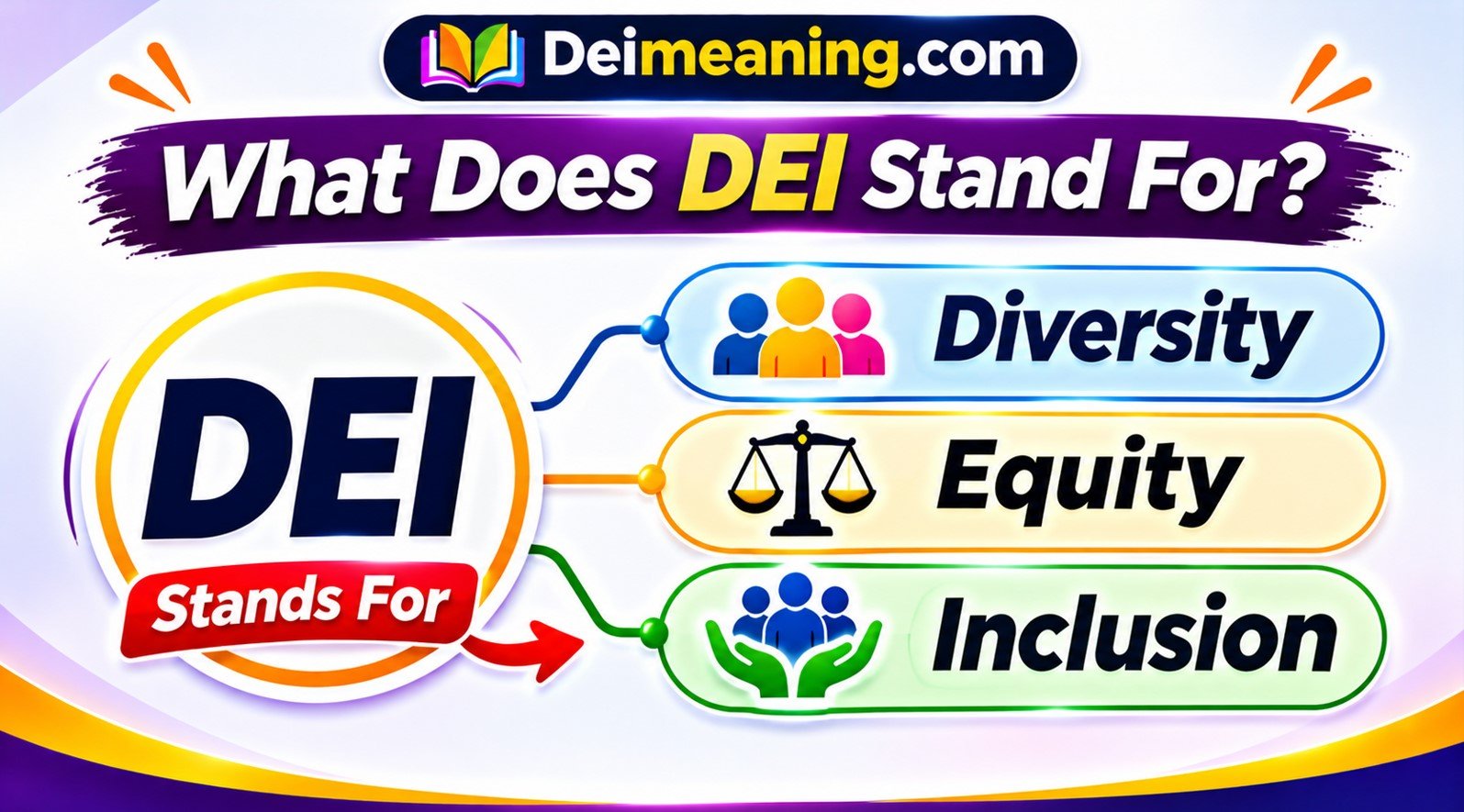
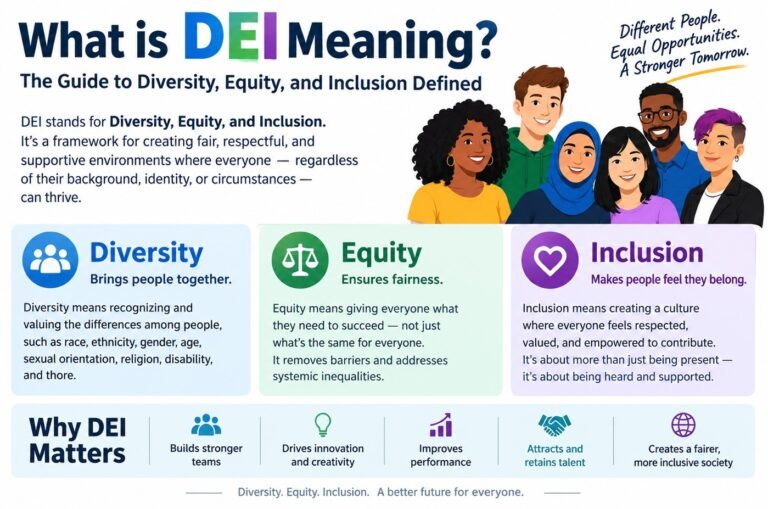
Before translating the term, we must define the concept. DEI stands for Diversity, Equity, and Inclusion.
These three words represent a framework that organizations use to promote the fair treatment and full participation of all people. This includes groups who have historically faced discrimination or underrepresentation based on identity, such as gender, religion, race, disability, or regional background.
- Diversity represents the “who.” It is the makeup of your workforce.
- Equity represents the “how.” It ensures fair processes and opportunities.
- Inclusion represents the “what.” It is the outcome where people feel they belong.
When combined, these principles create a healthy, productive, and safe working environment.
Read More: DEI Meaning in English
The Exact DEI Meaning in Kannada
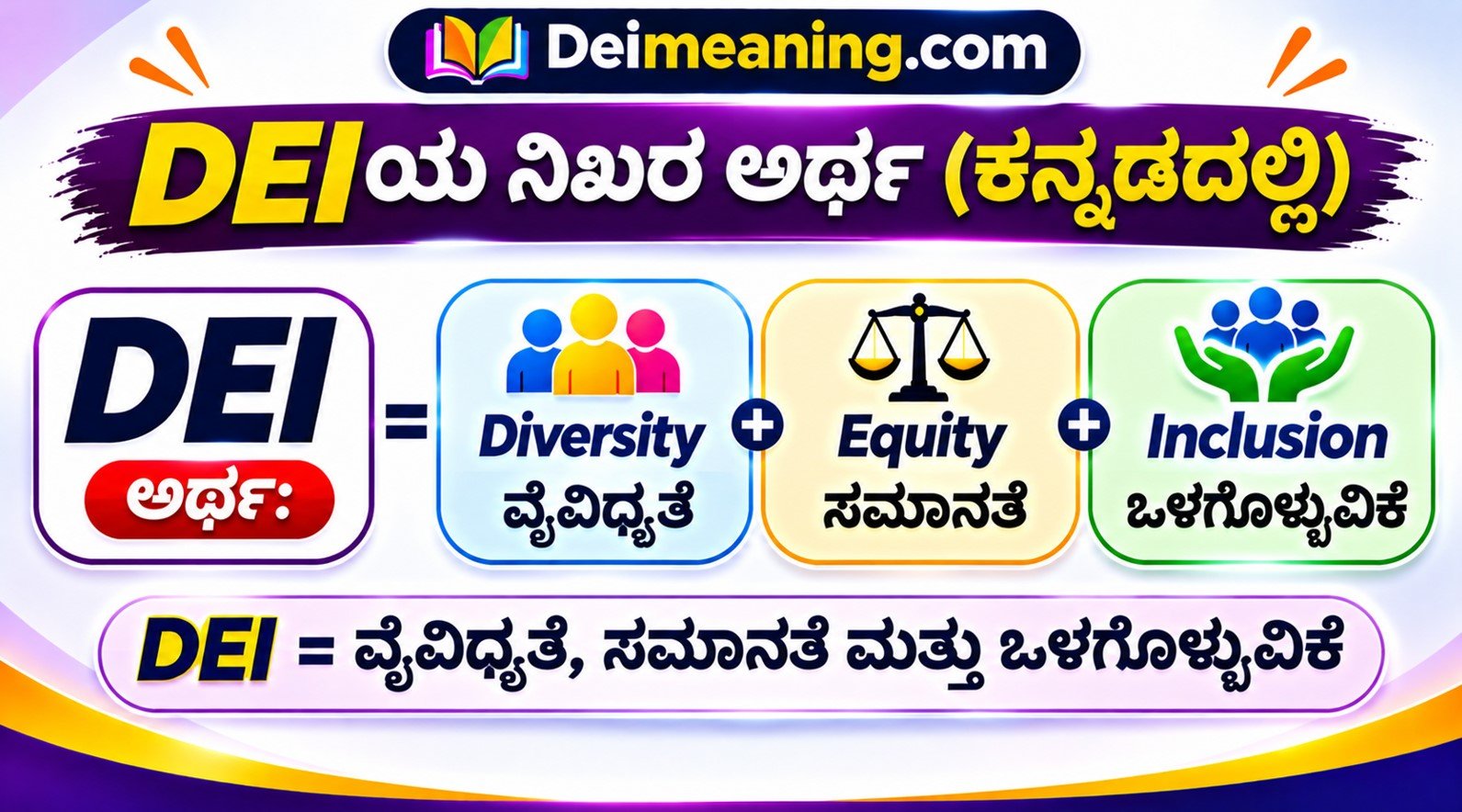
To express the concept of DEI in Kannada, we must translate its three core components. There is no single acronym like “DEI” in the Kannada language, so we use the specific words for each pillar.
Here is the precise DEI meaning in Kannada:
- Diversity: ವೈವಿಧ್ಯತೆ (Vaividhyate)
- Equity: ಸಮಾನತೆ (Samanate – Equality) or ನ್ಯಾಯಸಮ್ಮತತೆ (Nyayasammatate – Fairness/Equity)
- Inclusion: ಒಳಗೊಳ್ಳುವಿಕೆ (Olagolluvike) or ಸೇರ್ಪಡೆ (Serpade)
Therefore, if you want to speak about Diversity, Equity, and Inclusion in Kannada, you would refer to it as ವೈವಿಧ್ಯತೆ, ನ್ಯಾಯಸಮ್ಮತತೆ ಮತ್ತು ಒಳಗೊಳ್ಳುವಿಕೆ (Vaividhyate, Nyayasammatate mattu Olagolluvike).
Breaking Down the Three Pillars in a Local Context
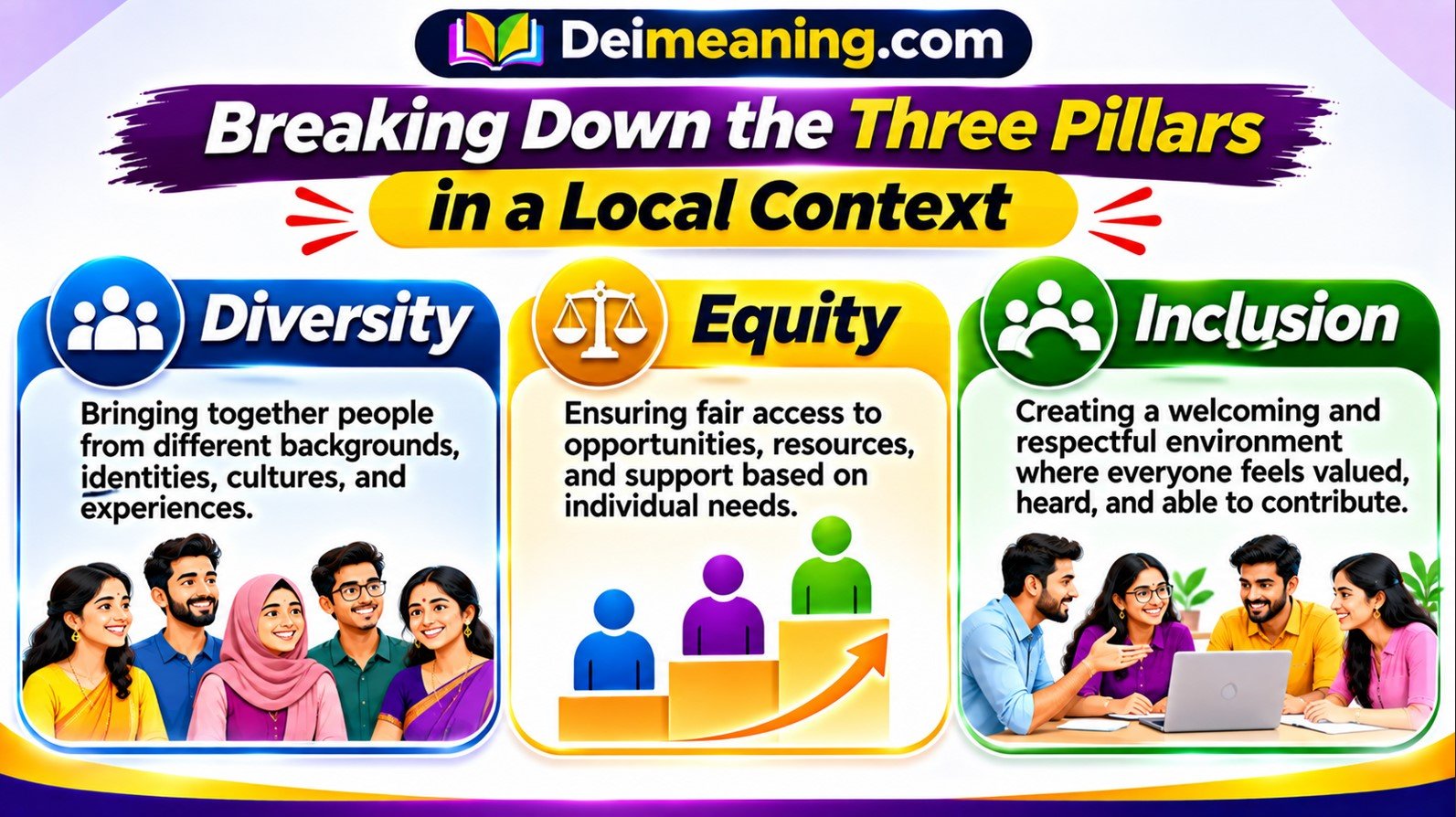
Understanding the literal translation is only the first step. Let us explore what these terms mean in everyday life and professional settings across Karnataka.
1. Diversity (ವೈವಿಧ್ಯತೆ – Vaividhyate)
Vaividhyate refers to the presence of differences within a given setting. In a workplace context, this means hiring people from various backgrounds.
In Karnataka, a diverse workplace might include:
- Employees speaking different languages (Kannada, Tulu, Konkani, Kodava, Urdu, and English).
- A balance of male, female, and transgender employees.
- People from different age groups (Gen Z, Millennials, and older generations working together).
- Individuals from various districts (North Karnataka, Coastal Karnataka, and South Interior Karnataka) bringing different cultural perspectives.
2. Equity (ನ್ಯಾಯಸಮ್ಮತತೆ – Nyayasammatate)
Many people confuse equity with equality. Equality means giving everyone the exact same resources. Equity (Nyayasammatate) means recognizing that each person has different circumstances and allocating the exact resources and opportunities needed to reach an equal outcome.
For example, an office in Mysuru might provide standard training materials in English. Giving everyone the English manual is equality. However, providing a Kannada-translated manual for employees who are more comfortable in the local language is equity. It ensures everyone has a fair chance to understand and succeed.
3. Inclusion (ಒಳಗೊಳ್ಳುವಿಕೆ – Olagolluvike)
Olagolluvike means creating an environment where everyone feels valued, respected, and heard. You can have a diverse team, but if certain members do not feel safe sharing their ideas, you do not have inclusion.
Inclusion in a Kannada-speaking environment looks like:
- Celebrating local festivals like Ugadi and Kannada Rajyotsava alongside global holidays.
- Ensuring meeting structures allow quiet or introverted employees a chance to speak.
- Creating a psychological safety net where employees can report unfair behavior without fear of retaliation.
Historical Roots of DEI in Karnataka
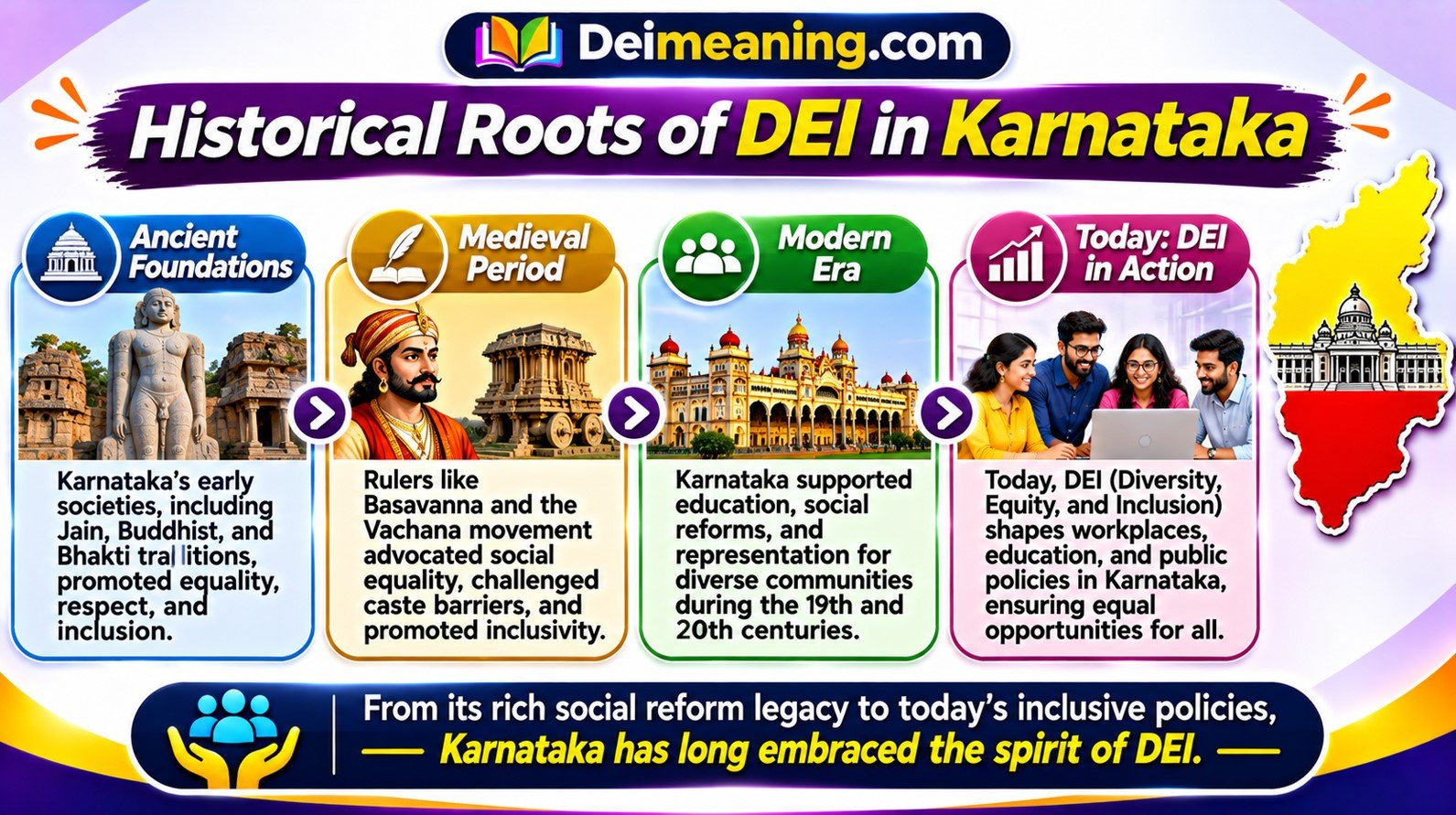
The concepts of diversity, equity, and inclusion are not just modern Western corporate imports. They have deep roots in Karnataka’s history and culture.
During the 12th century, the social reformer Basavanna established the Anubhava Mantapa in Karnataka. This was one of the earliest parliaments in human history. It was a platform that embodied true DEI long before the acronym existed.
- Diversity: People from all castes, professions, and economic backgrounds were invited.
- Equity: Everyone, regardless of their social standing, was given an equal platform to speak and share their life experiences (Vachanas).
- Inclusion: Women, such as Akka Mahadevi, were actively included in profound philosophical debates, which was incredibly rare for that era.
When modern companies in Karnataka promote DEI, they are essentially continuing a rich local tradition of social harmony and mutual respect.
Click Here: Vox Populi Vox Dei Meaning
Why DEI Matters in Bengaluru’s Corporate World
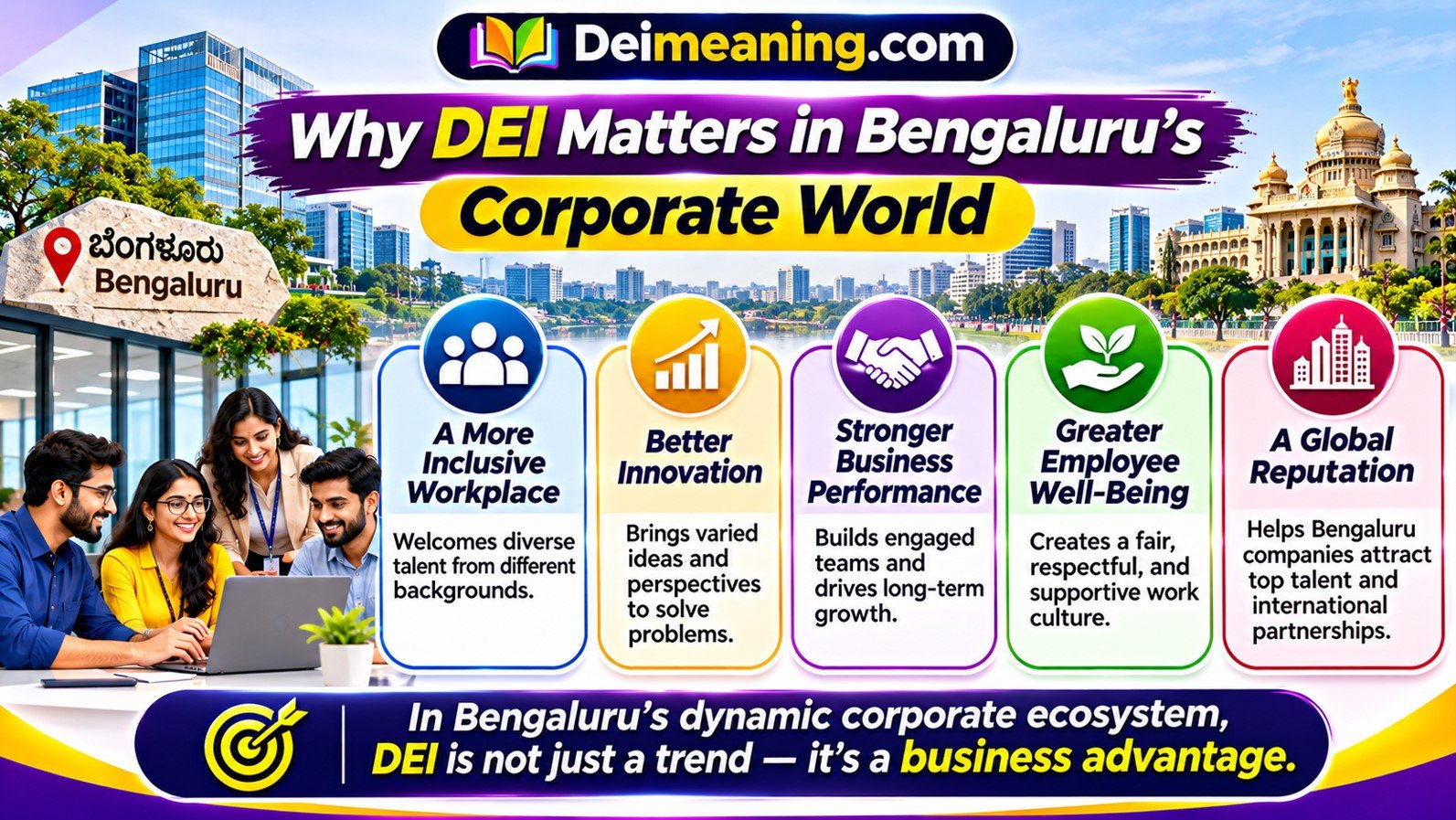
Bengaluru is the Silicon Valley of India. It attracts talent from every corner of the country and the globe. This massive influx of diverse talent makes DEI initiatives absolutely critical for businesses operating here.
Driving Innovation
Companies in Bengaluru thrive on innovation. When you put a team of people with the exact same background in a room, you get conventional ideas. When you mix locals from Hubballi, tech experts from Chennai, and project managers from Delhi, you generate a diversity of thought. This leads to better problem-solving and creative product development.
Attracting Top Talent
Modern job seekers look beyond salary. They want to know a company’s culture. If a multinational corporation in Whitefield or Electronic City ignores Olagolluvike (Inclusion), they will lose top talent to competitors who foster a welcoming environment.
Bridging the Local and Global Divide
Many tech companies in Karnataka struggle with the divide between the local Kannada-speaking population and migrant workers. A strong DEI policy helps bridge this gap. It encourages mutual respect, language exchange, and cultural appreciation, reducing friction between teams.
Traditional HR vs. DEI Approaches
How does a DEI-focused workplace differ from a traditional workplace? Here is a clear comparison table to highlight the differences.
| Feature | Traditional HR Approach | DEI-Focused Approach |
| Hiring Focus | Hires based strictly on past experience and standard degrees. | Hires for potential, removing biases in job descriptions. |
| Workplace Culture | Expects employees to “fit in” to the existing company culture. | Adapts the culture to “add” new diverse perspectives. |
| Problem Solving | Top-down approach; leaders make the decisions. | Collaborative approach; diverse voices are heard. |
| Language | Enforces a single corporate language (usually English). | Encourages multilingual communication where helpful. |
| Conflict Resolution | Focuses heavily on company liability and policy. | Focuses on psychological safety, empathy, and learning. |
Pros and Cons of DEI Initiatives
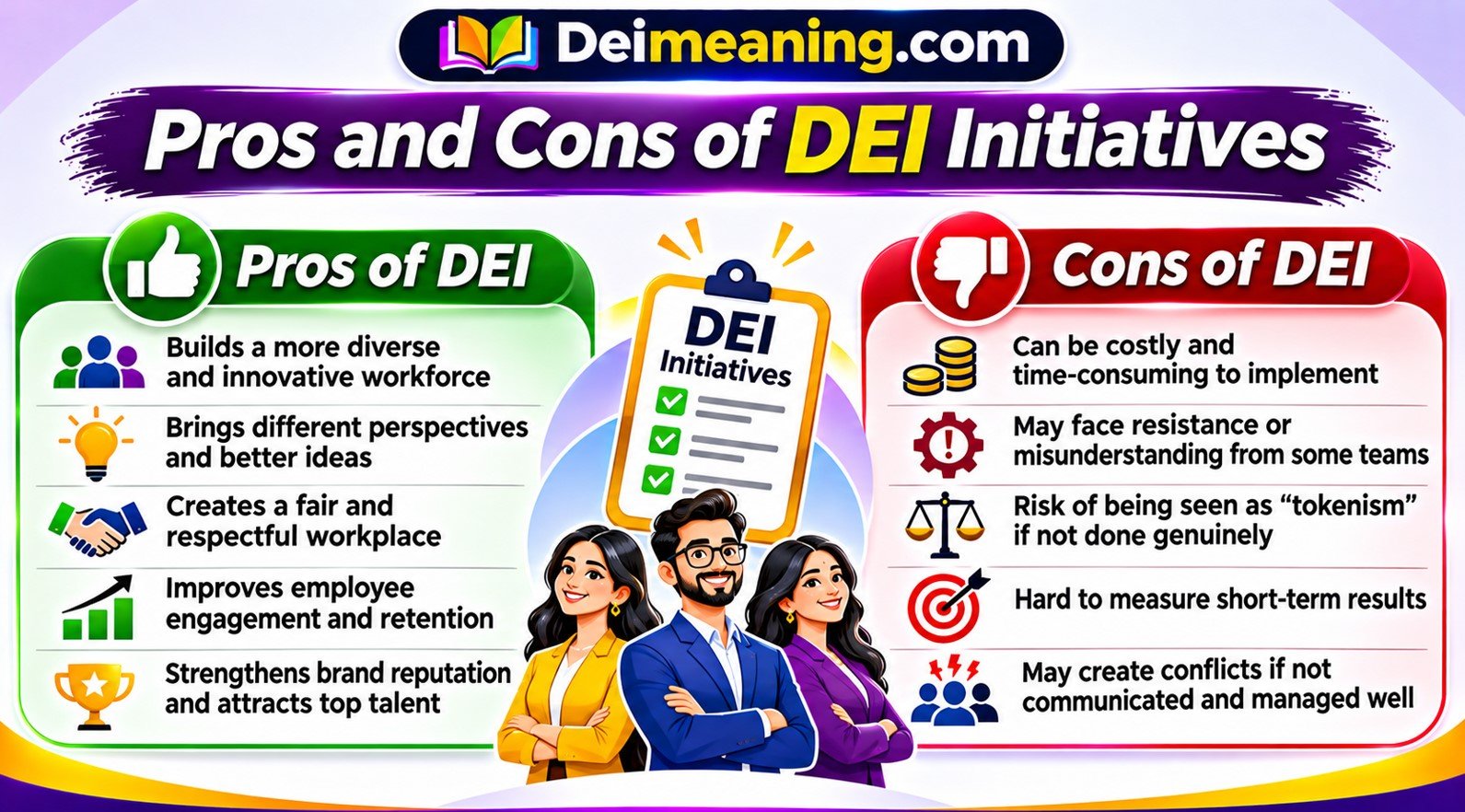
Implementing Vaividhyate, Nyayasammatate, and Olagolluvike brings massive benefits, but it also comes with execution challenges.
Pros (Advantages)
- Higher Financial Returns: Studies consistently show that companies with diverse executive teams out-earn their peers.
- Better Employee Retention: When employees feel included (Olagolluvike), they are less likely to quit. This saves companies immense recruitment costs.
- Enhanced Reputation: Companies known for fairness attract better clients and partnerships.
- Broader Customer Understanding: A diverse team can better understand and market to a diverse customer base.
Cons (Challenges)
- Implementation Friction: Changing legacy policies can cause initial discomfort among older staff members.
- Performative DEI: Some companies treat DEI as a checklist (tokenism) rather than genuinely changing their culture. This causes resentment.
- Communication Barriers: More diversity can sometimes lead to temporary miscommunications until the team learns how to collaborate effectively.
- Resource Intensive: Proper DEI training requires time, money, and dedicated leadership.
How to Implement DEI in Kannada-Centric Workplaces
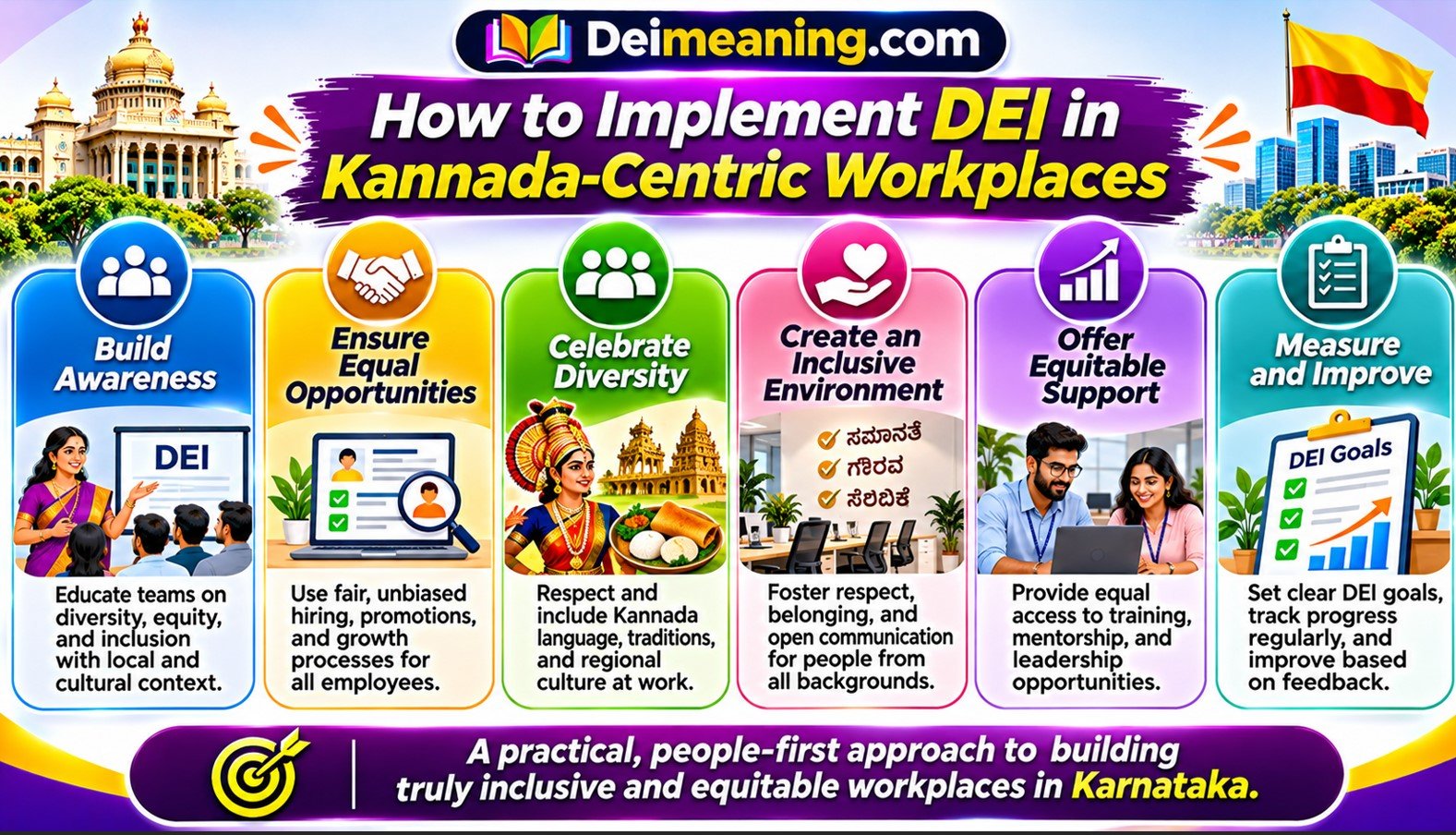
If you run a business in Karnataka and want to integrate DEI principles, you need actionable steps. Here is how you can promote ವೈವಿಧ್ಯತೆ ಮತ್ತು ಒಳಗೊಳ್ಳುವಿಕೆ (Diversity and Inclusion) today.
1. Audit Your Hiring Practices
Look at your current job descriptions. Are you using language that discourages certain groups? Remove biases from your screening process. Consider using “blind resume” practices where names and genders are hidden during the first round of reviews.
2. Celebrate Cultural Diversity
Do not just celebrate global corporate milestones. Acknowledge local Karnataka culture. Celebrate Nada Habba (Dasara) with the same enthusiasm as Diwali or Christmas. Encourage employees to share their regional cuisines during team lunches.
3. Provide Language Support
In tech hubs, English is the primary language, but this can alienate support staff, vendors, or local entry-level workers. Provide basic Kannada communication workshops for non-locals, and offer English upskilling for local workers. This is practical equity.
4. Establish Employee Resource Groups (ERGs)
Create safe spaces for underrepresented groups to connect. This could be a “Women in Tech” group, an “LGBTQ+ Allies” network, or a group dedicated to employees from rural Karnataka adapting to corporate life.
5. Train Leaders in Empathy
DEI fails if leadership does not believe in it. Train your managers to recognize their own unconscious biases. They must learn how to manage diverse teams without favoritism.
Measuring the Success of Your DEI Programs
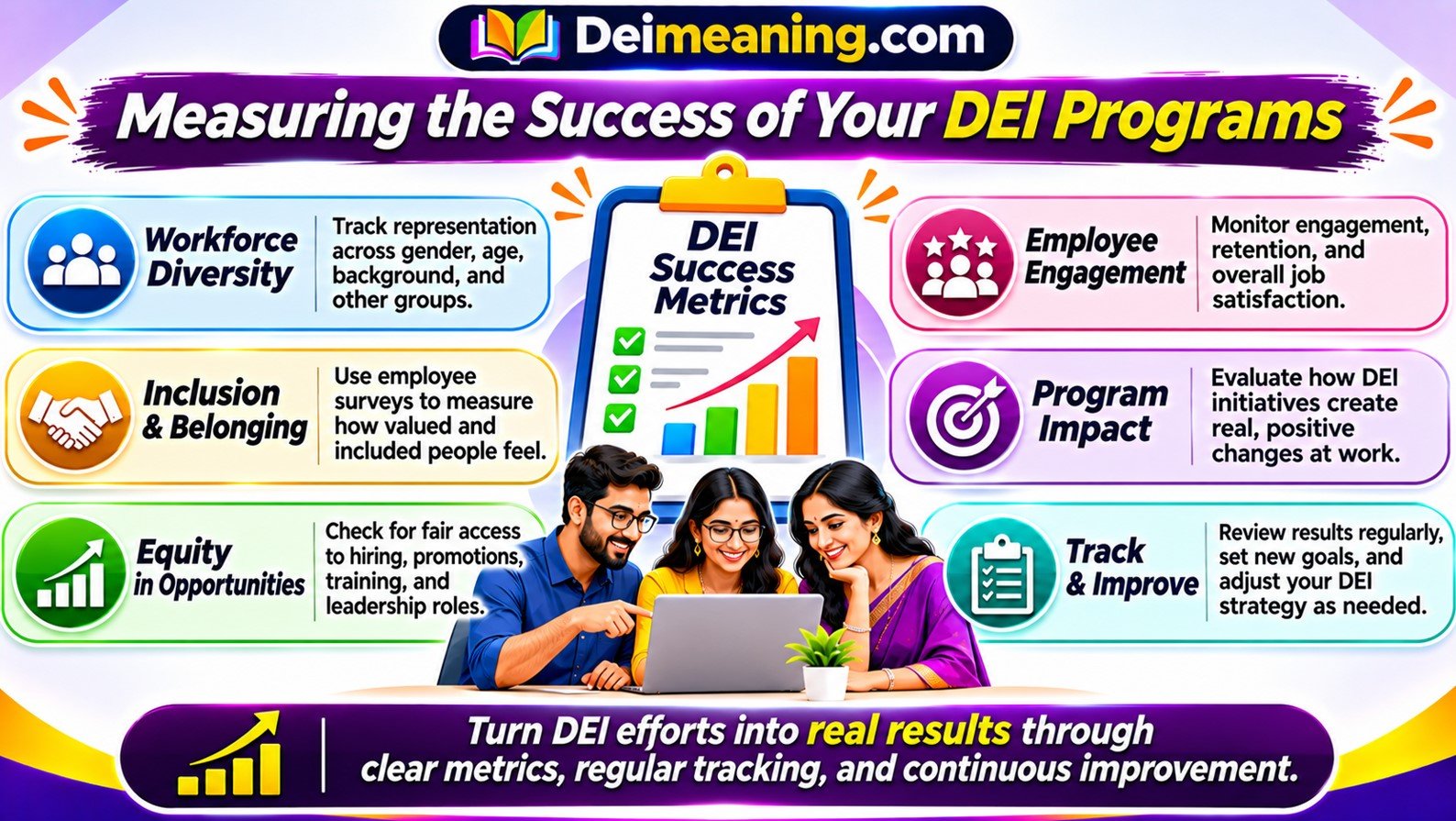
You cannot improve what you do not measure. Companies must track the success of their DEI initiatives to ensure they are making a real impact.
Key metrics to track include:
- Representation Metrics: What percentage of your leadership team are women? What is the regional makeup of your staff?
- Pay Equity Audits: Are men and women being paid equally for the exact same roles?
- Employee Satisfaction Surveys: Run anonymous quarterly surveys. Ask employees directly: “Do you feel safe expressing your true opinions at work?”
- Retention Rates by Demographic: If you notice that female employees resign at a much higher rate than male employees, you have a hidden inclusion problem that needs fixing.
Learn More: DEI Meaning in Hindi
Common Misconceptions About DEI in India
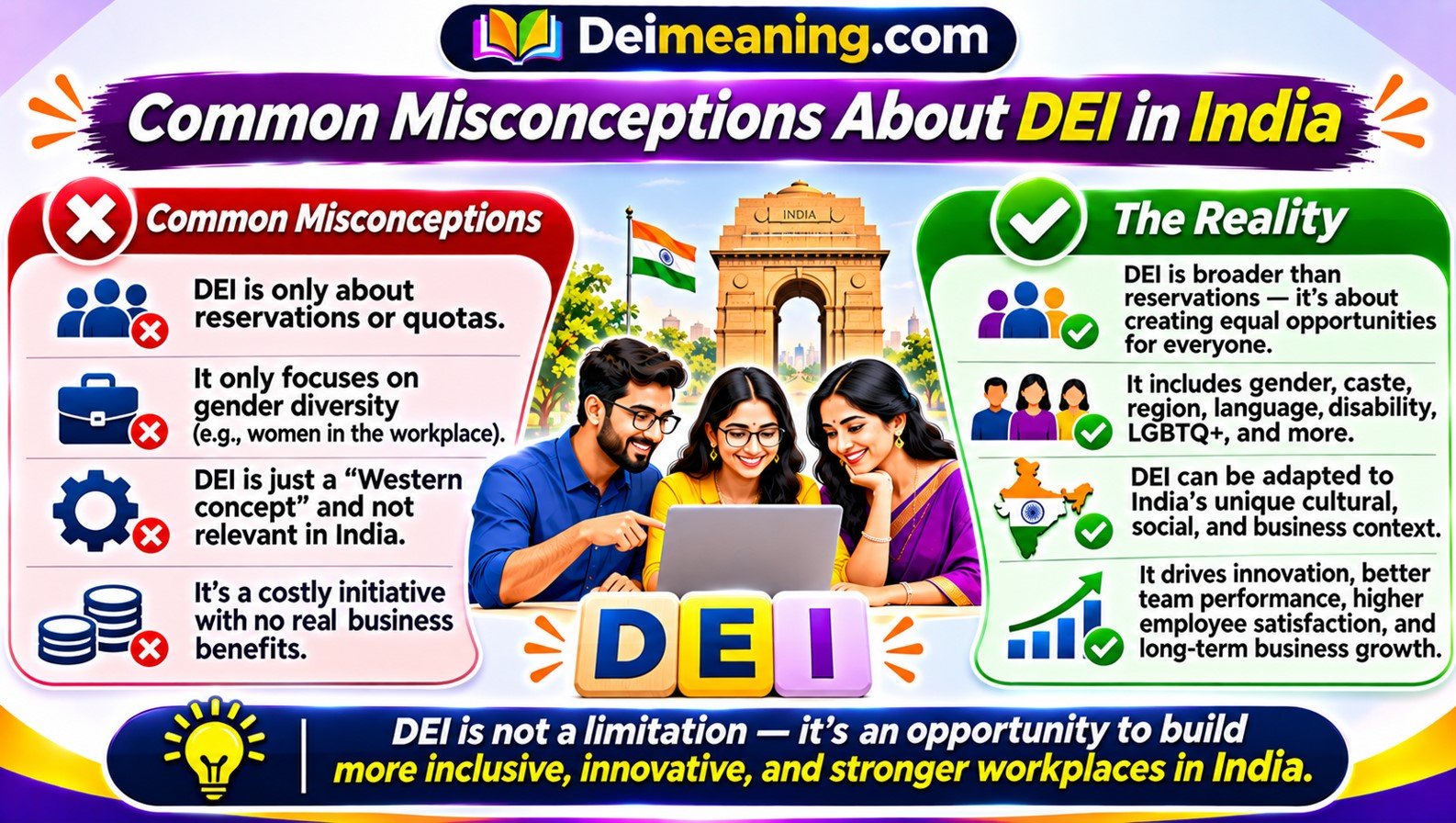
Because DEI is often discussed in a Western context, many Indians have misconceptions about how it applies locally. Let’s clear up a few myths.
Myth 1: DEI is just a reservation system.
Fact: DEI in the corporate world is not a quota system. It is not about hiring underqualified people just to hit a diversity metric. It is about removing unfair barriers so that highly qualified people from all backgrounds get an equal chance to compete.
Myth 2: DEI only focuses on gender.
Fact: While gender equality is a massive part of DEI, it is not the only part. True DEI also includes age diversity, neurodiversity (like hiring people with autism), physical disability accommodations, and regional inclusion.
Myth 3: DEI is only for large multinational companies.
Fact: Small businesses benefit from DEI just as much as large corporations. A local retail chain in Mangaluru can practice equity by ensuring fair shift distributions and providing a safe reporting mechanism for workplace harassment.
Frequently Asked Questions (FAQs)
1. What is the exact translation of DEI in Kannada?
The exact translation is ವೈವಿಧ್ಯತೆ, ನ್ಯಾಯಸಮ್ಮತತೆ ಮತ್ತು ಒಳಗೊಳ್ಳುವಿಕೆ (Vaividhyate, Nyayasammatate mattu Olagolluvike).
2. How do you say “Diversity” in Kannada?
Diversity translates to ವೈವಿಧ್ಯತೆ (Vaividhyate). It means variety and the inclusion of different types of people.
3. What is the difference between Equity and Equality in Kannada?
Equality is ಸಮಾನತೆ (Samanate), meaning giving everyone the exact same thing. Equity is ನ್ಯಾಯಸಮ್ಮತತೆ (Nyayasammatate), meaning fairness—giving people the specific tools they need to achieve an equal outcome.
4. Why is DEI important for companies in Bengaluru?
Bengaluru attracts a massive mix of local and migrant talent. DEI helps blend these diverse groups, fostering innovation, reducing cultural friction, and helping companies retain top talent.
5. How can I use DEI in everyday Kannada conversations?
You can use it when discussing fairness in society. For example: “ನಮ್ಮ ಕಚೇರಿಯಲ್ಲಿ ಒಳಗೊಳ್ಳುವಿಕೆ ಬಹಳ ಮುಖ್ಯ” (Namma kacheriyalli olagolluvike bahala mukhya) which means “Inclusion is very important in our office.”
6. Is DEI only about gender?
No. While gender parity is crucial, DEI also covers age, physical abilities, mental health, language, religion, and socio-economic backgrounds.
7. How does DEI impact employee retention?
When employees feel respected and included (Olagolluvike), they feel a sense of loyalty to the company. They are far less likely to leave for a competitor, which saves the company money and maintains team stability.
8. What is the Kannada word for workplace inclusion?
The most accurate word for inclusion in the workplace is ಒಳಗೊಳ್ಳುವಿಕೆ (Olagolluvike).
9. Can small businesses in Karnataka implement DEI?
Absolutely. Small businesses can implement DEI by ensuring fair pay, maintaining a respectful environment free of bias, and hiring locally from diverse communities.
10. What happens if a company ignores DEI?
Companies that ignore DEI often suffer from high employee turnover, a toxic work culture, lack of innovation, and damage to their public brand reputation.
Conclusion
Understanding the DEI meaning in Kannada requires more than a simple dictionary translation. It requires an understanding of how ವೈವಿಧ್ಯತೆ (Diversity), ನ್ಯಾಯಸಮ್ಮತತೆ (Equity), and ಒಳಗೊಳ್ಳುವಿಕೆ (Inclusion) shape our modern professional lives.
As Karnataka continues to grow as a global hub for technology, business, and education, embracing these principles is no longer optional; it is a business necessity. By bridging the gap between global corporate standards and local linguistic and cultural values, companies can build healthier, more innovative, and more successful teams.
When we practice true equity and inclusion, we honor both the modern demands of a globalized economy and the deep-rooted historical values of equality that Karnataka has cherished for centuries.