DEI Meaning in English: Definition, Examples & Key Principles
The modern workplace is evolving rapidly. A decade ago, business discussions in India revolved mostly around profit margins, scaling operations, and cutting costs. Today, a new conversation dominates boardrooms from Mumbai to Bengaluru. If you have recently browsed LinkedIn, read an HR manual, or attended a corporate town hall, you have likely encountered a specific three-letter acronym.
But what exactly is the DEI meaning in English, and why has it become the cornerstone of successful businesses?
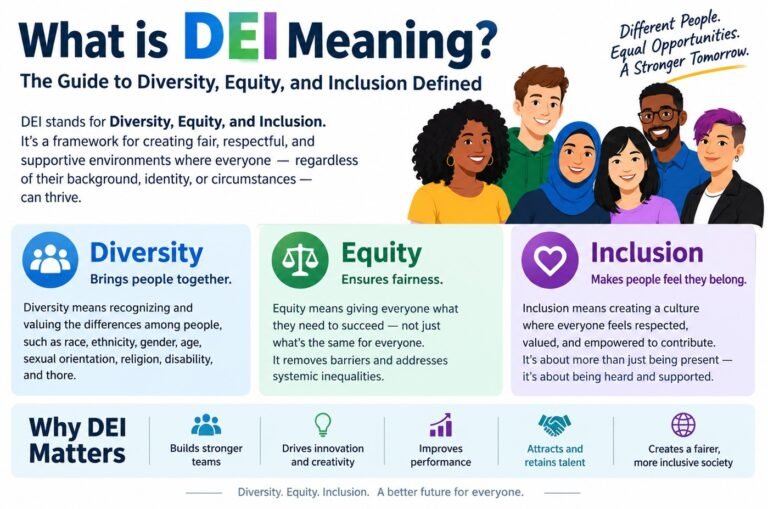
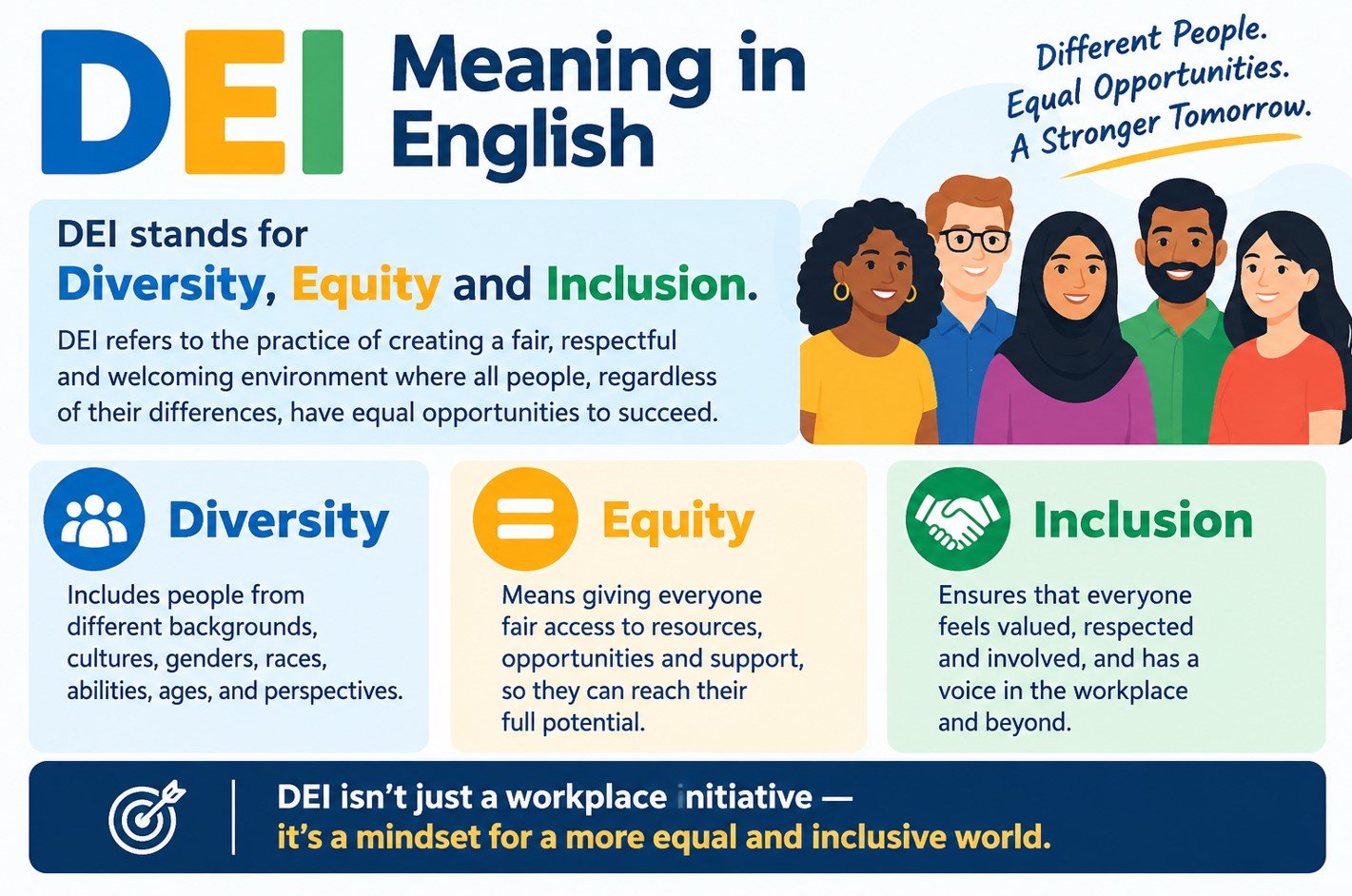
DEI stands for Diversity, Equity, and Inclusion. It is a framework that helps organizations build teams where people from all backgrounds feel valued, supported, and empowered to do their best work. In a country as vibrantly diverse as India—with its multitude of languages, cultures, religions, and socio-economic backgrounds—understanding this concept is no longer optional. It is a fundamental business requirement.
This comprehensive guide will break down the exact meaning of DEI, explore why it matters, highlight the challenges of implementing it, and provide actionable steps for modern Indian businesses.
What is the DEI Meaning in English?
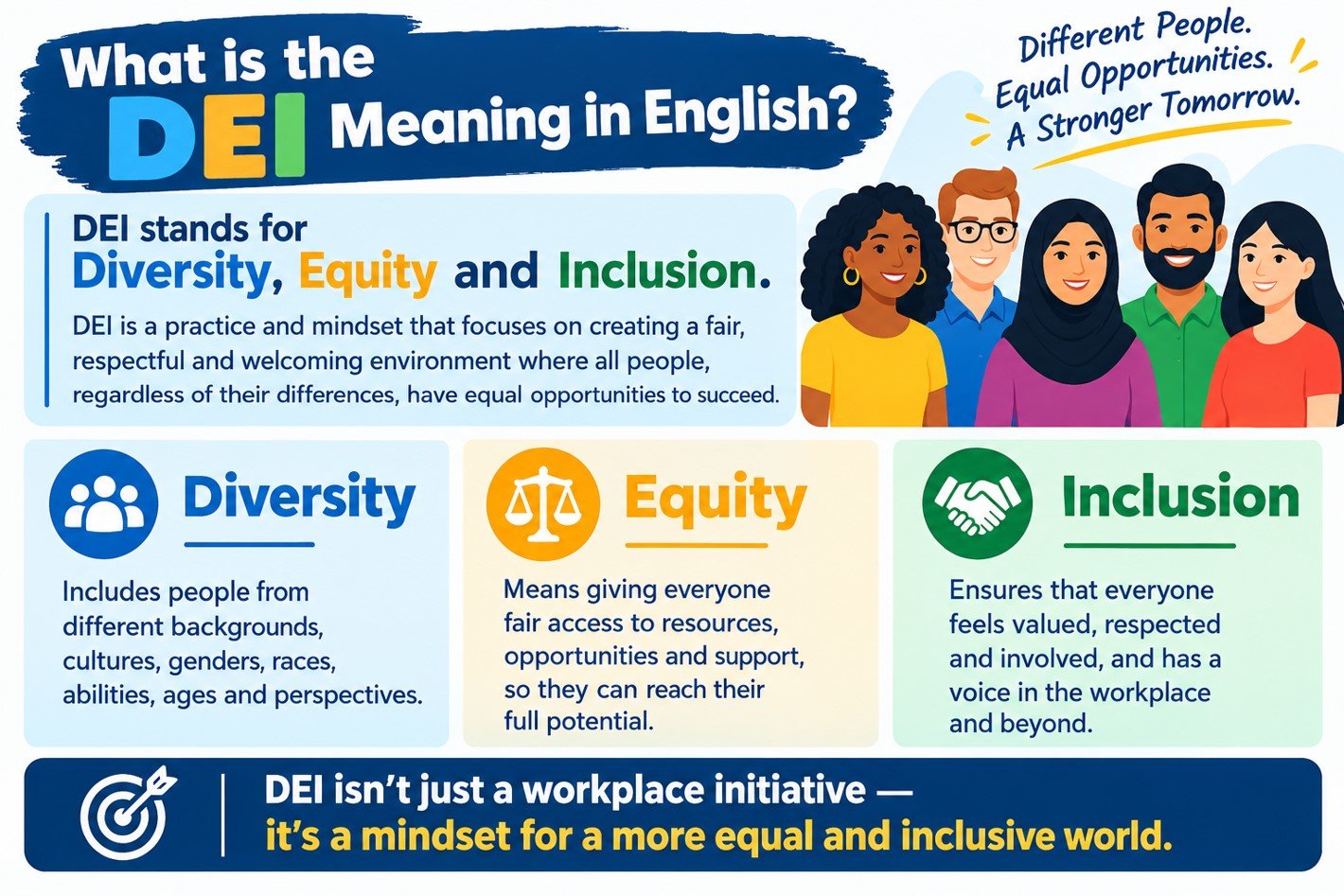
To truly grasp the concept, we must break the acronym down into its three distinct components. While they are often grouped together, Diversity, Equity, and Inclusion represent different ideas that work together to create a healthy ecosystem.
Defining Diversity (The “Who”)
Diversity refers to the presence of differences within a given setting. In the workplace, it means building a workforce comprised of people with varying characteristics.
These characteristics include:
- Demographics: Gender, age, ethnicity, and geographic location.
- Cognitive traits: Different problem-solving approaches and educational backgrounds.
- Identities: Sexual orientation (LGBTQ+), religious beliefs, and cultural heritage.
- Physical abilities: Including neurodivergent individuals and people with physical disabilities.
In simple terms, diversity is about representation. It is the act of ensuring your company reflects the society in which it operates.
Defining Equity (The “Fairness”)
Equity is the process of ensuring that programs, processes, and systems are fair and impartial. It recognizes that every individual has different circumstances, and allocates the exact resources and opportunities needed to reach an equal outcome.
Many people confuse equity with equality. Equality means giving everyone the exact same tools. Equity acknowledges that some employees might face systemic barriers. For example, a candidate from a tier-3 city in India might have brilliant technical skills but lack the polished English communication skills of a tier-1 city candidate. Equity means providing communication training so both employees have an equal shot at a promotion.
Click Here: What is DEI Meaning?
Defining Inclusion (The “Belonging”)
Inclusion is the practice of ensuring that people feel a sense of belonging in the workplace. You can hire a diverse team, but if those individuals do not feel safe sharing their ideas, you have failed at inclusion.
Renowned diversity expert Verna Myers famously said: “Diversity is being invited to the party. Inclusion is being asked to dance.”
An inclusive culture actively values different perspectives. It ensures that minority voices are not just present in the room, but actually heard at the decision-making table.
Equity vs. Equality: Understanding the Core Difference
To master the DEI meaning in English, you must understand the distinction between equity and equality. While both aim for fairness, their approaches differ significantly.
| Feature | Equality | Equity |
| Basic Definition | Treating everyone exactly the same, regardless of their starting point. | Giving everyone what they specifically need to be successful. |
| Core Assumption | Everyone benefits from the exact same support. | People have different needs, backgrounds, and systemic barriers. |
| Workplace Example | Giving all employees a standard ₹10,000 allowance for home office setup. | Giving higher allowances to entry-level staff who do not have dedicated workspaces at home. |
| Training Approach | Providing standard leadership training to all managers. | Offering specialized mentorship programs for women to bridge the leadership gap. |
| The End Goal | Uniformity in resource distribution. | Fairness in final outcomes and opportunities. |
Why is DEI Crucial for Corporate India?
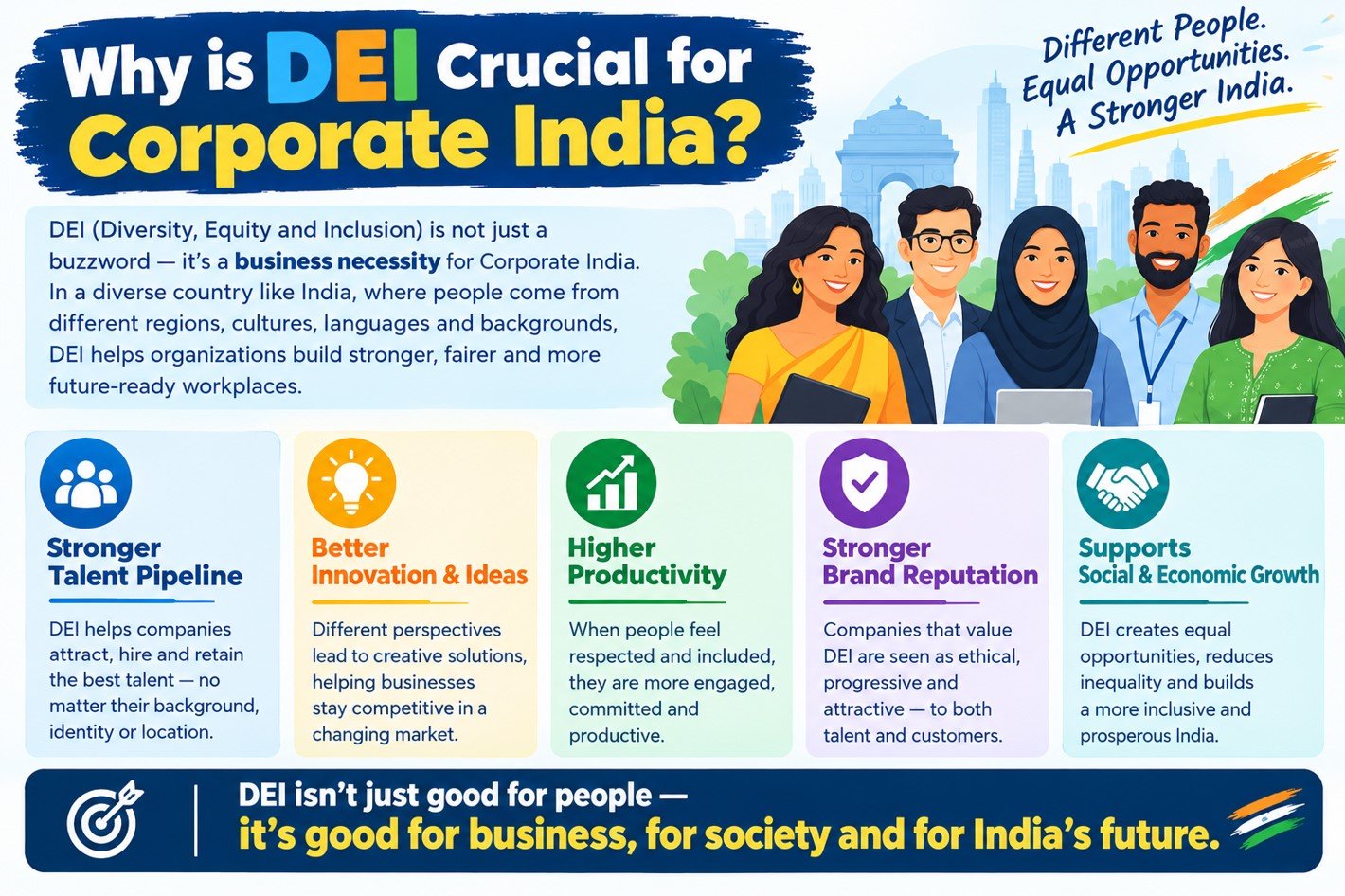
India is often described as a subcontinent rather than a single country. With 22 official languages, thousands of dialects, and a complex socio-cultural fabric, India is naturally diverse. Consequently, ignoring DEI in the Indian corporate sector limits growth.
Tapping into the Demographic Dividend
India has one of the youngest populations in the world. Gen Z and Millennial workers prioritize workplace culture over traditional perks. They want to work for employers who value mental health, social justice, and equal opportunity. Companies with strong DEI frameworks attract the best young talent.
Driving Innovation
Homogeneous teams—where everyone thinks alike—produce predictable results. When you bring together a software engineer from rural Maharashtra, a marketing expert from urban Delhi, and a neurodivergent designer, you create a melting pot of ideas. Diverse teams anticipate different user needs, leading to superior product development and problem-solving.
Connecting with a Diverse Consumer Base
Indian businesses cater to a highly fragmented market. A marketing campaign that works in Punjab might fail entirely in Tamil Nadu. Having a diverse workforce ensures that your company understands the cultural nuances, purchasing habits, and pain points of all customer segments.
Core Pillars of DEI in the Indian Workplace
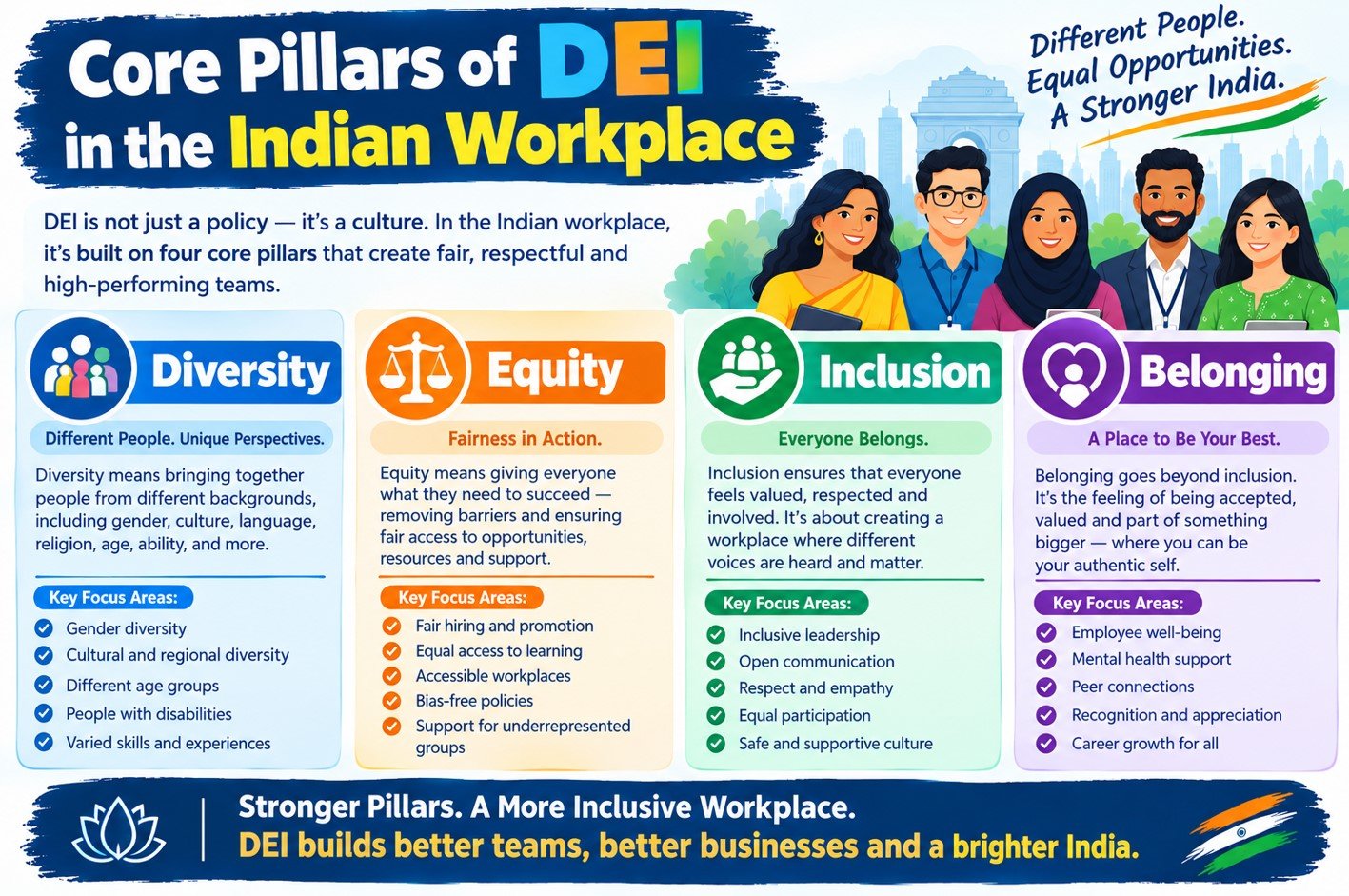
When implementing DEI in India, organizations must focus on specific local realities.
1. Gender Diversity and Leadership
Despite high educational enrollment rates among Indian women, the female labor force participation rate remains historically low compared to global averages. Effective DEI programs actively work to fix this “leaky pipeline” by offering strong maternity benefits, flexible return-to-work programs, and strict enforcement of the Prevention of Sexual Harassment (POSH) act.
2. Generational Diversity
For the first time in history, we have four generations working together: Baby Boomers, Gen X, Millennials, and Gen Z. A solid DEI strategy creates mentorship programs where older employees share industry wisdom, while younger employees teach digital fluency (reverse mentorship).
3. Regional and Linguistic Inclusion
In India, language can inadvertently become a barrier. Corporate communication is primarily in English, which can exclude talented individuals from regional medium schools. Inclusive companies provide translation support, encourage regional language expression in informal settings, and do not equate English fluency with core intelligence.
4. LGBTQ+ Inclusion
Following the decriminalization of Section 377 in 2018, corporate India has made strides in LGBTQ+ inclusion. Progressive companies now offer gender-neutral restrooms, inclusive health insurance policies that cover same-sex partners, and safe spaces like Employee Resource Groups (ERGs) for queer employees.
5. Disability and Neurodiversity
True inclusion goes beyond physical ramps and elevators. It involves providing assistive technologies for visually impaired staff, flexible hours for individuals dealing with chronic illnesses, and tailored workspaces for neurodivergent employees (such as those with autism or ADHD) who might need quieter environments to thrive.
The Pros and Cons of DEI Initiatives
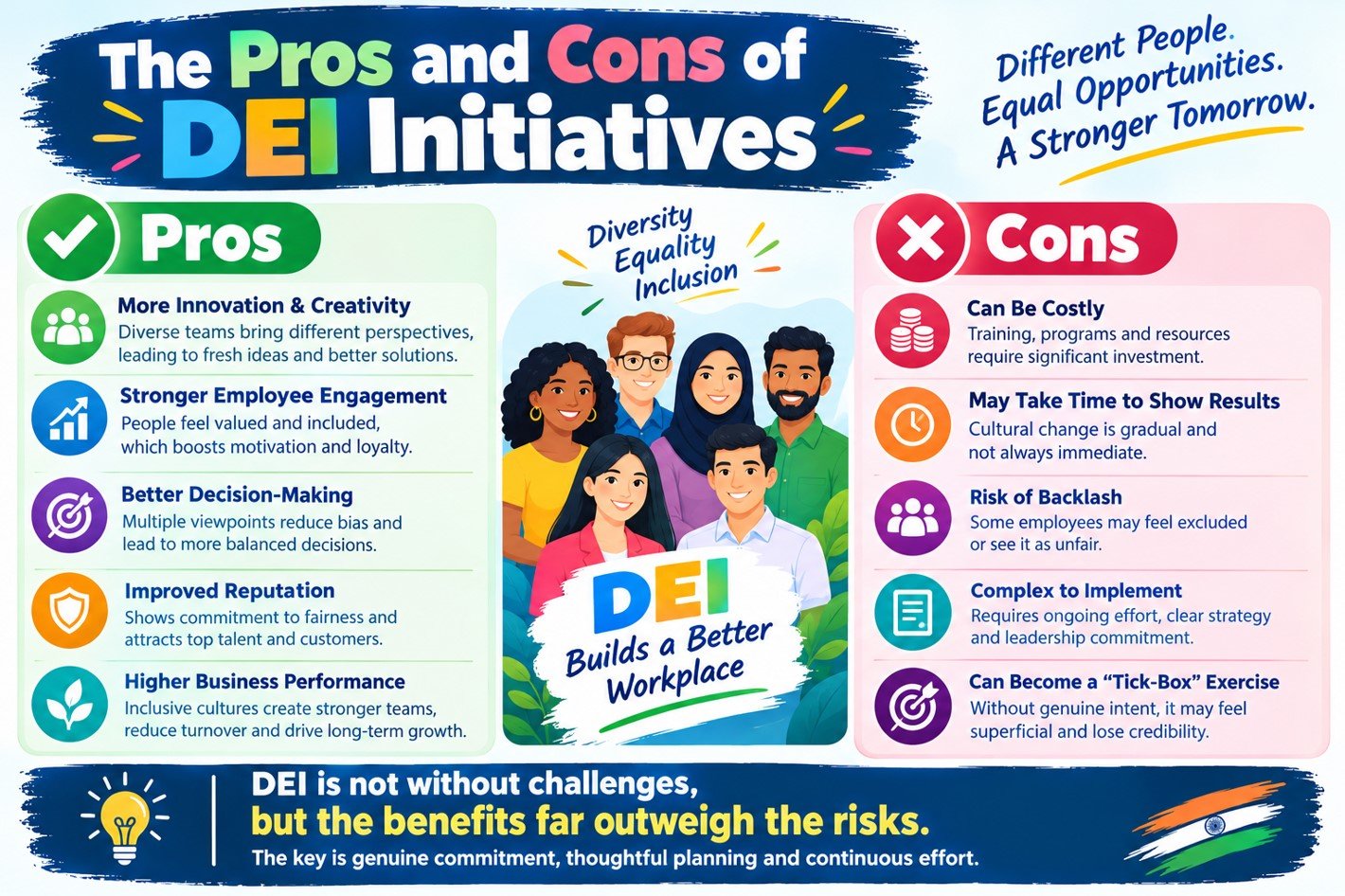
Every organizational change comes with benefits and challenges. Understanding both sides helps leaders implement strategies effectively.
Pros of DEI Implementation
- Higher Employee Retention: When people feel respected and valued, they stay. This dramatically reduces recruitment and training costs.
- Enhanced Employer Brand: Companies known for strong DEI policies receive positive PR and are viewed favorably by top-tier candidates.
- Better Financial Performance: Multiple global studies have shown that companies with diverse executive boards consistently outperform their less-diverse competitors in terms of profitability.
- Reduced Groupthink: Diverse teams naturally challenge the status quo, preventing the “echo chamber” effect that often leads to bad business decisions.
Cons (Challenges) of DEI Implementation
- Risk of Tokenism: If done incorrectly, DEI can feel like a box-ticking exercise. Hiring a minority candidate just to meet a quota, without giving them real authority, leads to frustration.
- Initial Resistance: Long-tenured employees might view DEI initiatives as a threat to their existing privileges, leading to workplace friction.
- Implementation Costs: Restructuring hiring processes, conducting company-wide bias training, and upgrading office infrastructure requires financial investment and time.
- Measurement Difficulties: While diversity is easy to measure (e.g., gender ratios), inclusion and belonging are subjective feelings that are much harder to quantify.
How to Build a Strong DEI Strategy
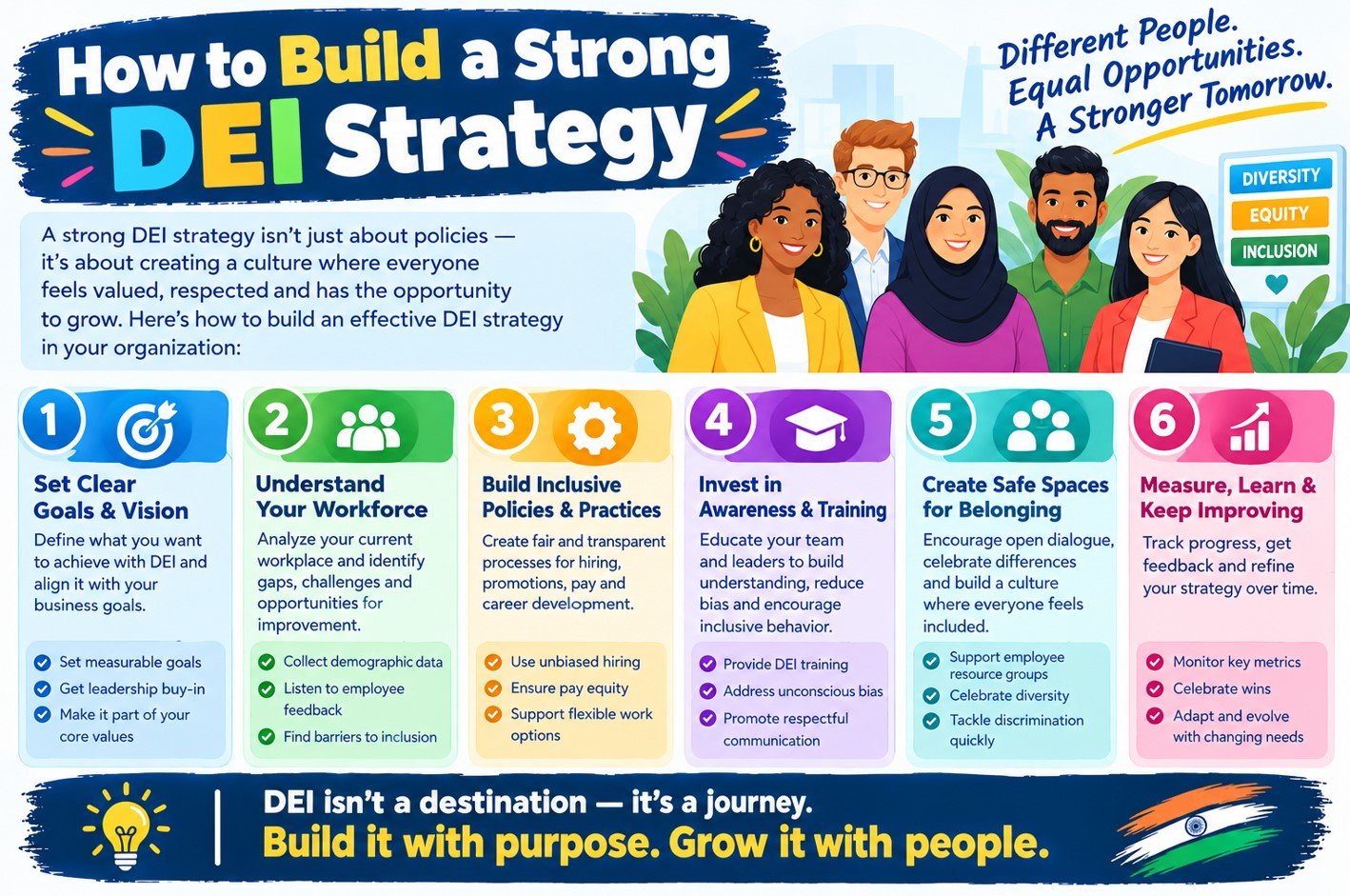
Understanding the DEI meaning in English is only the first step. The real challenge is putting it into practice. Here is how Indian companies can build sustainable DEI frameworks.
Step 1: Start from the Top
DEI cannot be relegated to the HR department alone. It must be championed by the CEO and the executive board. When leadership openly communicates the importance of inclusivity and ties it to business goals, the entire organization takes it seriously.
Step 2: Implement Blind Recruitment
Unconscious bias affects everyone. To counter this, companies can use “blind recruitment” practices. This involves removing names, ages, genders, and educational institution names from resumes before the hiring manager sees them. This forces managers to evaluate candidates purely on their skills and experience.
Step 3: Establish Employee Resource Groups (ERGs)
ERGs are voluntary, employee-led groups that foster a diverse, inclusive workplace. Examples include a “Women in Tech” group, an “LGBTQ+ Allies” network, or a “Working Parents” support circle. These groups provide a safe space for employees to share experiences and advise leadership on policy changes.
Step 4: Conduct Regular Pay Audits
Equity means equal pay for equal work. Organizations must regularly audit their payroll to identify and eliminate gender or demographic pay gaps. Transparency in salary bands helps build immense trust among the workforce.
Step 5: Train for Unconscious Bias
Every human has unconscious biases—quick judgments our brains make based on societal conditioning. Regular, interactive training sessions help employees recognize these biases in themselves. The goal is not to shame people, but to make them aware so they can make fairer decisions.
Learn More: Vox Populi Vox Dei Meaning
Frequently Asked Questions (FAQs)
1. What is the full form of DEI?
DEI stands for Diversity, Equity, and Inclusion. It is a corporate framework designed to promote fair treatment and full participation of all people, particularly groups that have historically been underrepresented or subject to discrimination.
2. Why is DEI important in India?
India is incredibly diverse in terms of religion, language, caste, and geography. DEI is essential to ensure that people from all these varying backgrounds have equal opportunities to succeed in the corporate sector, which ultimately drives innovation and economic growth.
3. What is a real-world example of DEI in the workplace?
An example of DEI is a company modifying its leave policy to include “floating holidays.” Instead of only giving days off for mainstream national festivals, employees can choose to take leave on days that are culturally or religiously significant to their specific community.
4. Who is responsible for DEI in a company?
While Human Resources (HR) often facilitates DEI programs, true responsibility lies with everyone. The CEO drives the vision, managers implement inclusive practices daily, and employees foster a welcoming environment for their peers.
5. How does DEI impact business profits?
Diverse teams bring different perspectives, which leads to better problem-solving and more innovative products. Additionally, inclusive companies attract top talent and have lower employee turnover, which saves money and boosts overall profitability.
6. What is the difference between diversity and inclusion?
Diversity is about the makeup of your workforce (hiring people of different genders, ages, and backgrounds). Inclusion is about the workplace culture (ensuring those diverse individuals feel safe, valued, and empowered to speak up).
7. How can small businesses or startups implement DEI?
Small businesses do not need massive budgets for DEI. They can start by writing inclusive job descriptions, ensuring their interview panels are diverse, offering flexible working hours, and fostering an open-door policy where every employee’s voice is heard.
8. What is “performative DEI”?
Performative DEI occurs when a company publicly claims to support diversity and inclusion for PR purposes but fails to implement meaningful internal changes. An example is changing a corporate logo to rainbow colors during Pride Month, but having zero anti-discrimination policies for LGBTQ+ staff.
9. Does DEI only focus on gender and race?
No. While gender is a massive component, true DEI encompasses neurodiversity, physical disabilities, socioeconomic backgrounds, age, educational diversity, and sexual orientation.
10. How do you measure the success of DEI initiatives?
Success is measured through a mix of quantitative and qualitative data. Quantitative metrics include hiring ratios, promotion rates across different demographics, and pay equity audits. Qualitative metrics are gathered through anonymous employee satisfaction surveys measuring the “sense of belonging.”
Conclusion
Understanding the DEI meaning in English goes far beyond memorizing the words Diversity, Equity, and Inclusion. It is about fundamentally rewiring how businesses operate.
In the context of corporate India, DEI is the bridge between a traditional, hierarchical working model and a modern, innovative, and globally competitive workforce. When companies prioritize these three pillars, they do more than just improve their public image. They build resilient organizations where top talent thrives, employee turnover drops, and groundbreaking ideas are born.
Ultimately, DEI is not an HR trend or a temporary corporate buzzword. It is the future of work. Organizations that recognize this and actively build equitable, inclusive environments today will be the undeniable market leaders of tomorrow.