What is DEI Meaning? The Guide to Diversity, Equity, and Inclusion Defined
Have you noticed how top companies are rapidly changing the way they hire, promote, and treat their employees? The secret behind this massive shift comes down to three simple letters: DEI.
But what is the exact DEI meaning, and why has it become the most talked-about framework in corporate India today?
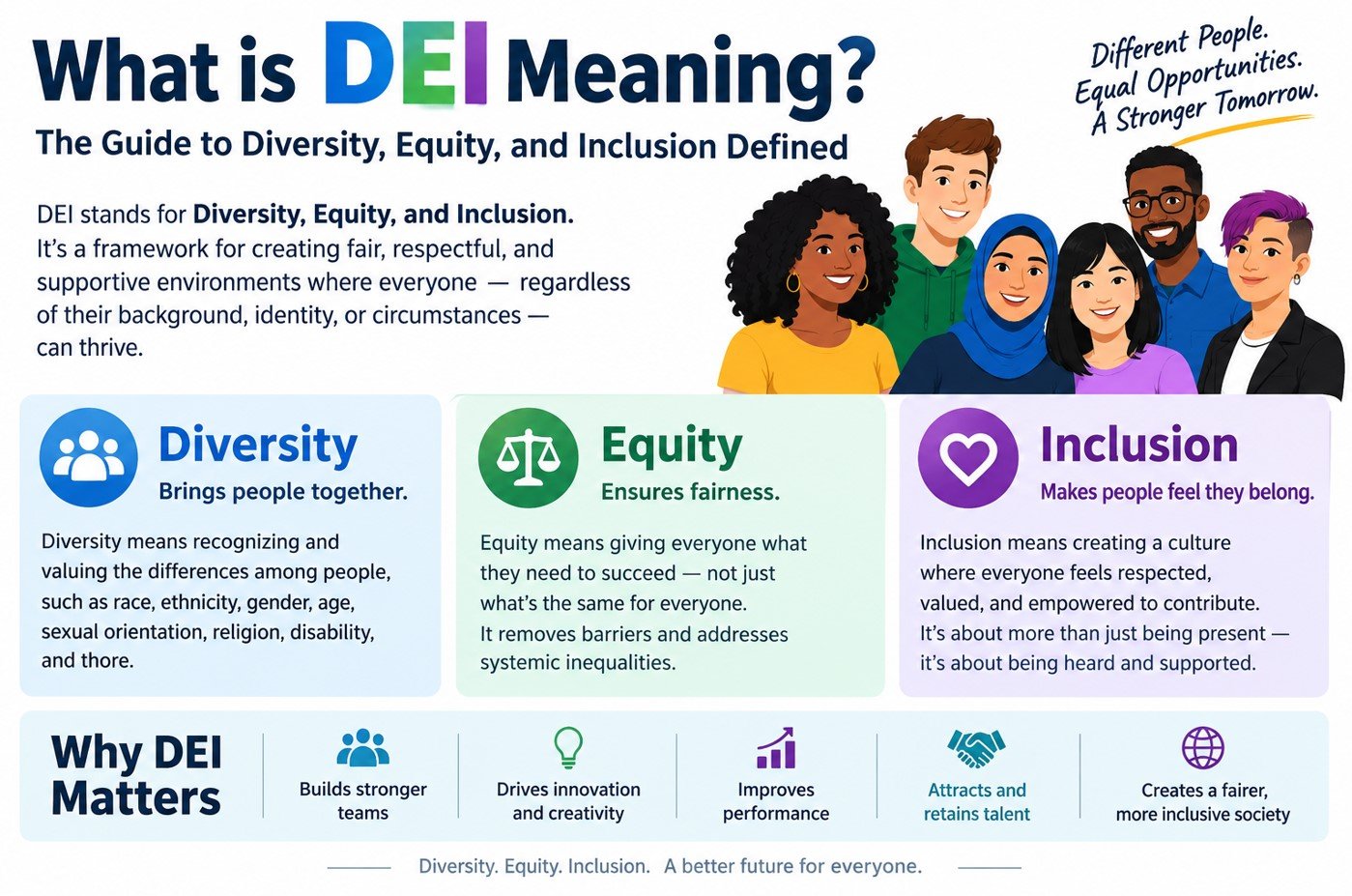
DEI stands for Diversity, Equity, and Inclusion. It is not just an HR buzzword or a passing trend. It is a fundamental business strategy designed to build fair workplaces where everyone feels safe, valued, and empowered to do their best work. In a country as vast and culturally rich as India, understanding how to manage different languages, backgrounds, genders, and generations under one office roof is no longer optional. It is a survival skill for modern businesses.
In this comprehensive guide, we will break down exactly what DEI means, how to implement it, the real-world pros and cons, and how you can measure its success in your organization.
What is the Exact DEI Meaning?
Featured Snippet Answer:
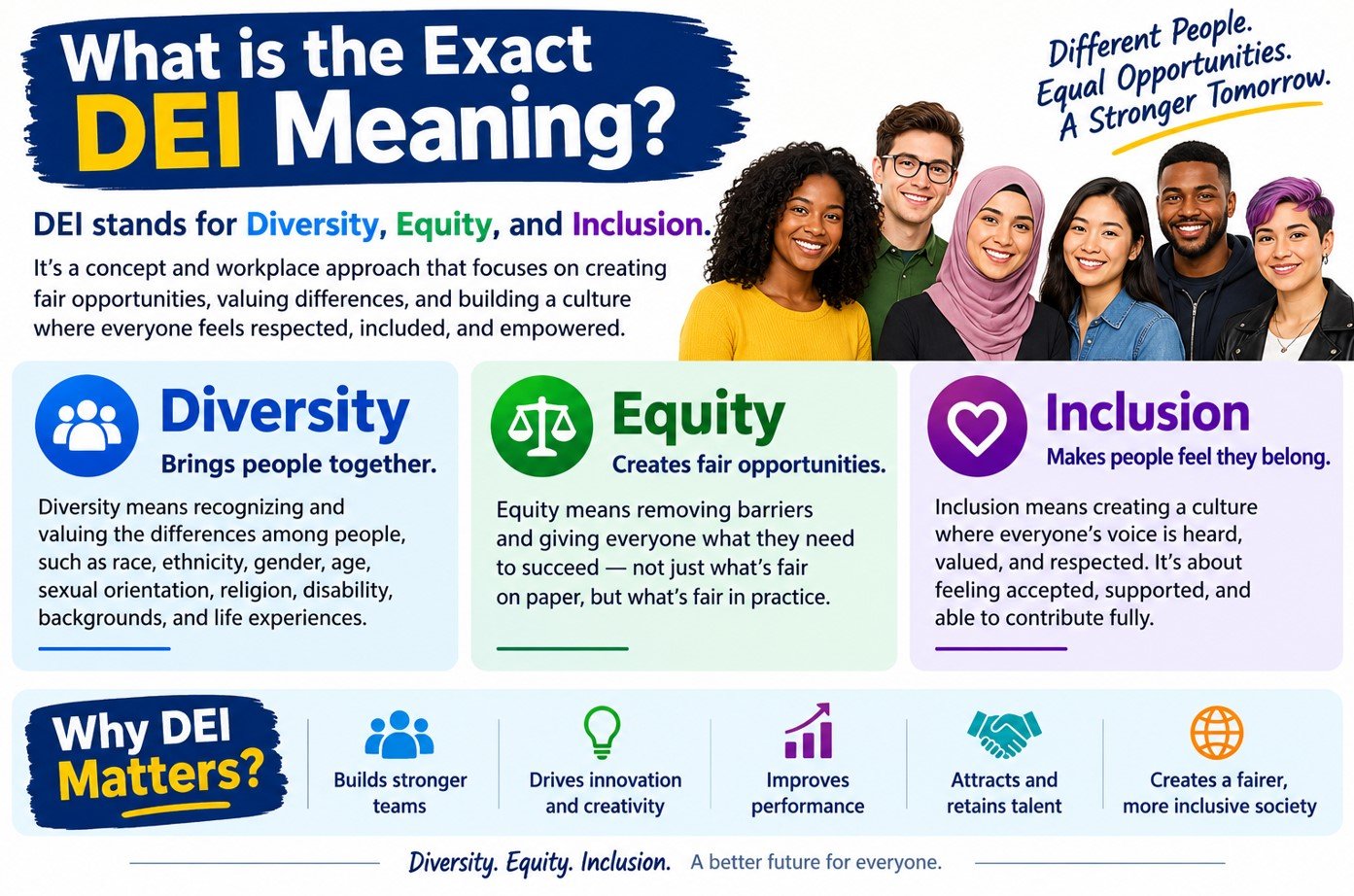
The meaning of DEI is Diversity, Equity, and Inclusion. It refers to organizational frameworks that promote the fair treatment and full participation of all people. DEI focuses on building diverse teams, ensuring equal access to opportunities (equity), and creating a workplace culture where everyone feels they belong (inclusion).
DEI strategies aim to identify and remove historical barriers that have kept underrepresented groups from thriving in the workplace.
Breaking Down the Three Pillars: D, E, and I
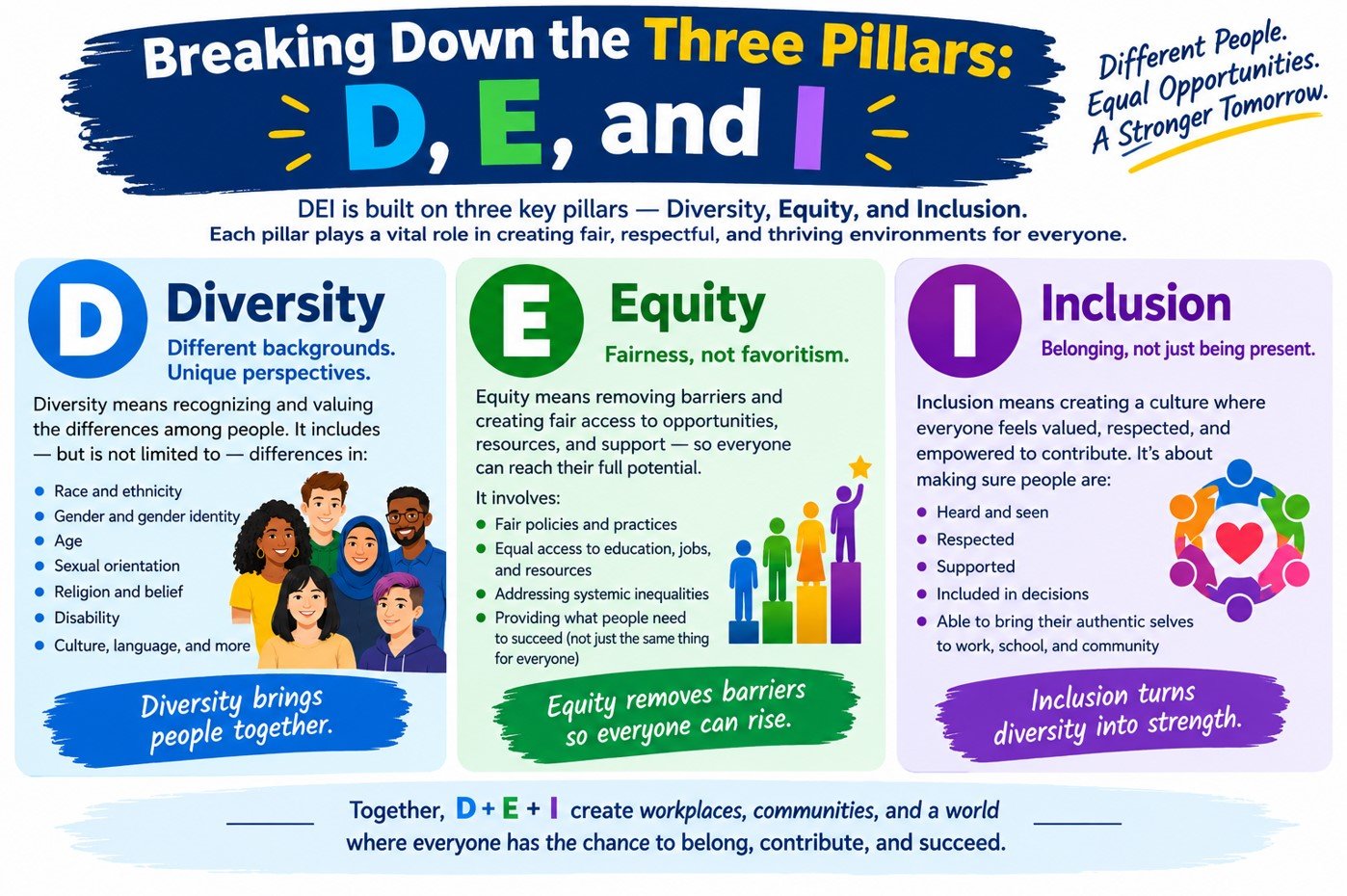
To truly grasp the DEI meaning, we need to look at each letter individually. They work together, but they represent entirely different concepts.
Diversity (The “Who”)
Diversity refers to the presence of differences within a given setting. In the workplace, this means hiring people from various backgrounds. Diversity is about the makeup of your workforce.
Key types of diversity include:
- Demographic: Age, gender, race, ethnicity, and sexual orientation (LGBTQIA+).
- Experiential: Education levels, economic background, and geographic location (e.g., hiring talent from Tier 2 and Tier 3 Indian cities, not just metros).
- Cognitive: Different ways of thinking, problem-solving, and processing information (including neurodiversity, like autism or ADHD).
- Cultural: Religion, caste, native languages, and family structures.
Equity (The “Fairness”)
Equity is the process of ensuring that workplace processes and programs are impartial, fair, and provide equal possible outcomes for every individual.
Unlike equality (giving everyone the exact same thing), equity recognizes that different people have different starting points. An equitable company identifies imbalances and provides specific resources to help everyone reach the same finish line. For example, providing a screen reader for a visually impaired employee is an act of equity.
Inclusion (The “Experience”)
Inclusion is the practice of ensuring that people feel a sense of belonging in the workplace.
You can have a diverse team, but if those diverse employees do not feel safe sharing their ideas, you have failed at inclusion. Inclusion means every employee feels respected, heard, and valued for who they are. It is the secret ingredient that makes diversity actually work.
Why DEI Matters in the Indian Workplace

India is incredibly complex. With 22 official languages, diverse religious beliefs, an evolving gender dynamic, and a massive generational shift, the Indian workplace is a melting pot. Ignoring DEI in this environment leads to toxic work cultures and high employee turnover.
Here is why strong DEI policies are vital for Indian companies today:
Driving Business Innovation
When everyone in a boardroom thinks the same way, you get stagnant ideas. Bringing together people from different backgrounds leads to better brainstorming. A team containing people from different Indian states, genders, and age groups will naturally spot different market opportunities and avoid cultural blind spots.
Attracting Top-Tier Talent
Modern professionals, especially Gen Z and Millennials, actively research a company’s culture before applying. If an organization lacks female leadership or has a reputation for bias, top candidates will simply go to the competition.
Expanding Market Reach
If your company wants to sell products to the entirety of India (from urban Mumbai to rural Bihar), your internal team needs to reflect that diverse customer base. Diverse teams understand diverse customers better.
Equality vs. Equity: What is the Difference?
One of the biggest hurdles in understanding the DEI meaning is confusing equity with equality. While both aim for fairness, their methods are entirely different.
| Feature | Equality | Equity |
| Definition | Giving everyone the exact same resources and opportunities. | Giving individuals the specific resources they need to succeed. |
| Core Assumption | Everyone starts from the exact same place. | People start from different places and have different barriers. |
| Example in Hiring | Asking every candidate to take a standard written test. | Offering extra time or alternative formats for a candidate with dyslexia. |
| Workplace Benefit | Creates a standardized, uniform process. | Levels the playing field to create genuinely fair outcomes. |
| Visual Analogy | Giving everyone a size 9 shoe. | Giving everyone a shoe that actually fits their foot. |
The Pros and Cons of Implementing DEI
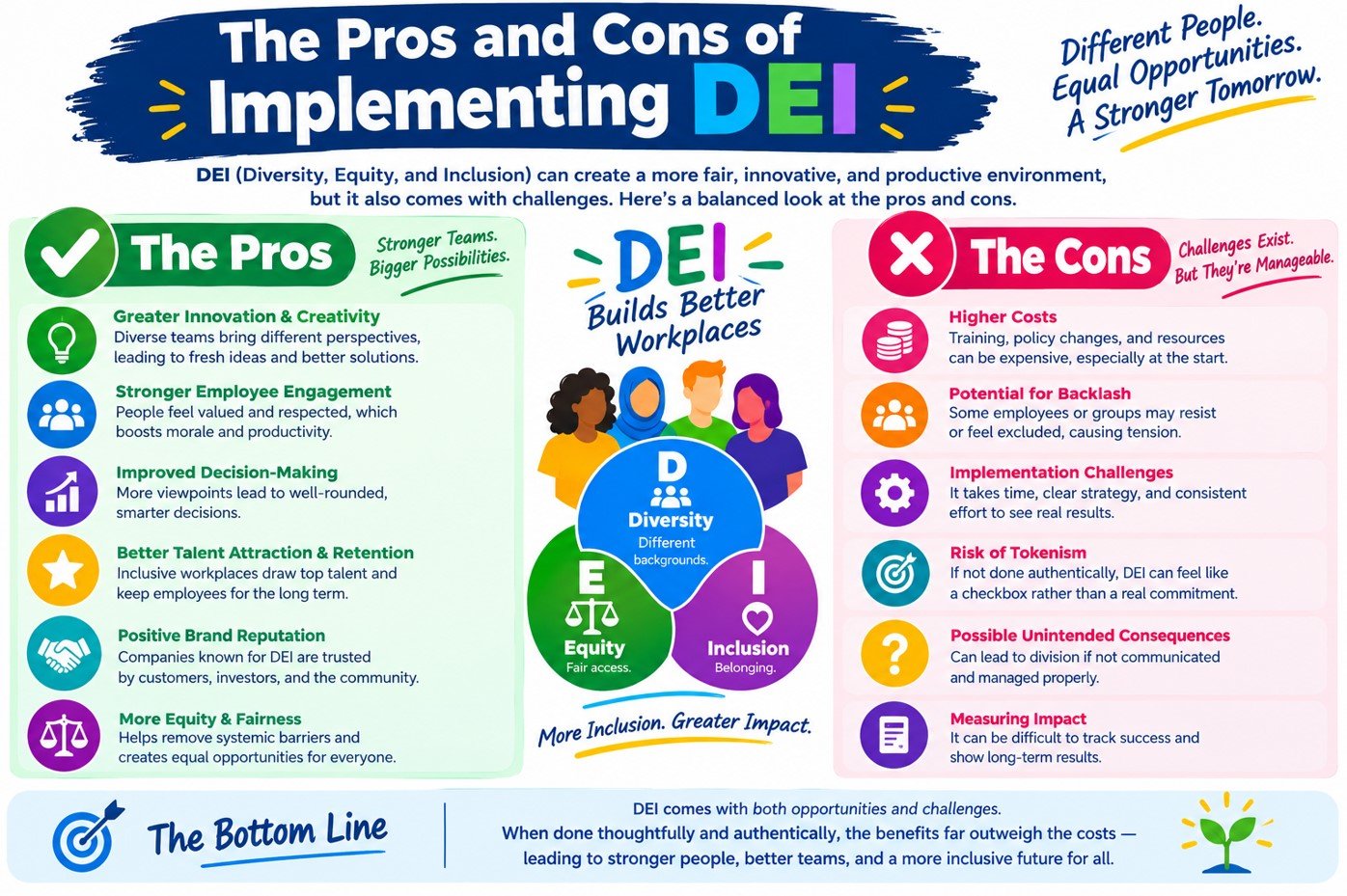
Like any major corporate initiative, bringing a DEI framework into your business comes with distinct advantages and potential roadblocks.
Pros of DEI
- Higher Employee Retention: When people feel safe and valued, they stay longer. This drastically reduces the cost of recruiting and training new staff.
- Better Financial Performance: Studies consistently show that diverse executive teams yield higher profit margins.
- Enhanced Problem Solving: Diverse teams resolve complex problems faster because they bring varied perspectives to the table.
- Stronger Brand Reputation: Companies known for inclusive practices receive positive PR and build deeper trust with the public.
Cons (Challenges) of DEI
- Resistance to Change: Tenured employees might feel threatened by new hiring practices or misunderstand the goals of DEI, leading to internal friction.
- Risk of Tokenism: If a company only hires diverse candidates to “look good” on a website without actually listening to them, it creates a highly toxic environment.
- Implementation Costs: Restructuring HR policies, running training programs, and auditing pay scales requires time, money, and dedicated resources.
- Survey Fatigue: Constantly asking employees to fill out diversity surveys without taking real action frustrates the workforce.
5 Common DEI Mistakes Companies Make
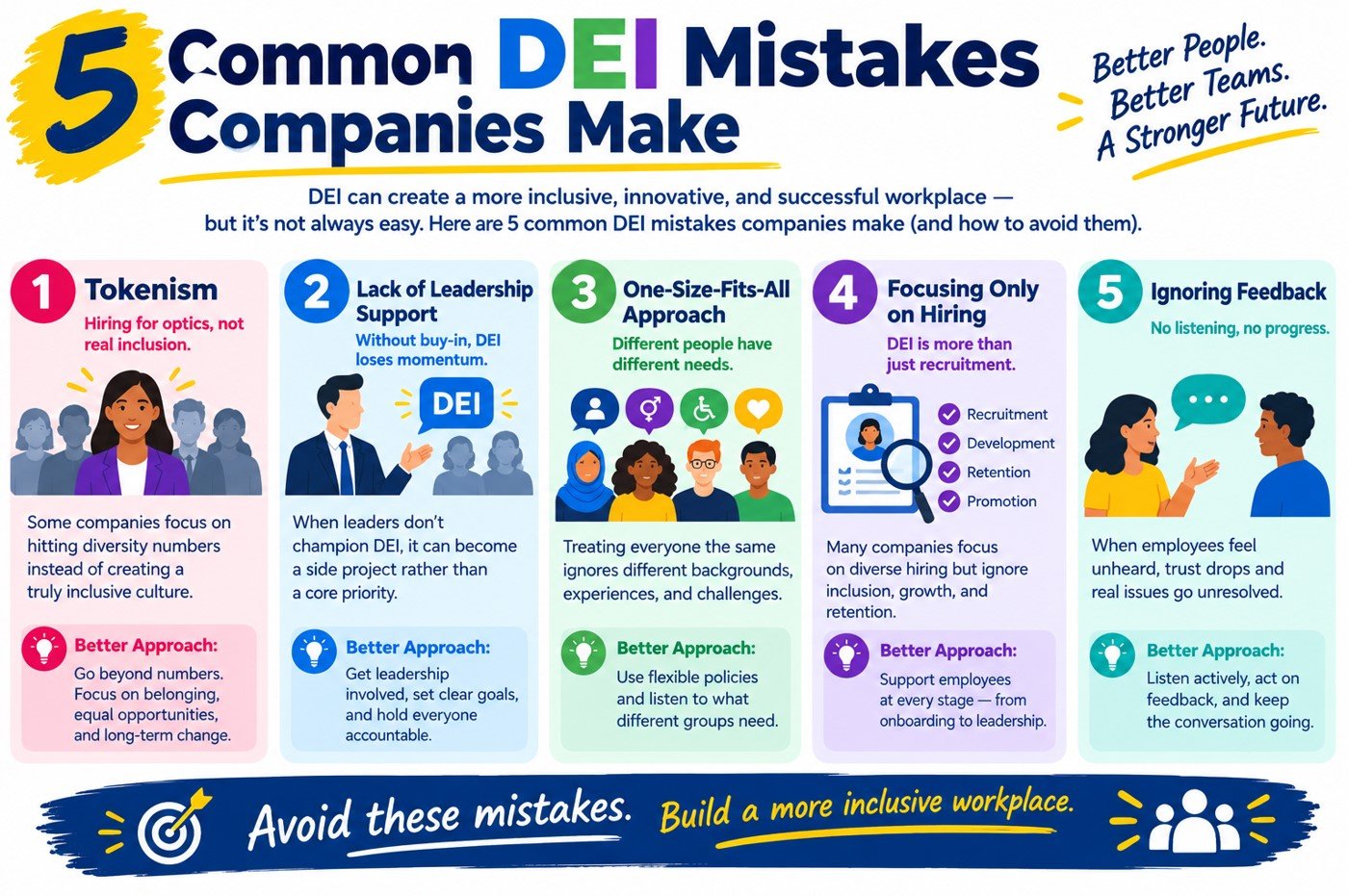
Understanding the DEI meaning is only step one. Executing it properly is where most organizations stumble. Here are the most common pitfalls:
- Treating DEI as an HR-Only Issue: DEI must start at the CEO and leadership level. If executives do not actively participate, the initiatives will fail.
- Focusing Only on Hiring: Recruiting a diverse workforce means nothing if your internal culture pushes them to quit within six months. Focus equally on inclusion.
- Ignoring Invisible Diversity: Companies often focus on visible traits (gender, race) but forget about neurodiversity, socioeconomic background, and mental health.
- Creating a “Check-the-Box” Culture: Running one annual unconscious bias workshop is not a DEI strategy. DEI requires continuous, daily effort.
- Forgetting to Track Metrics: If you do not measure your promotion rates, pay equity, and turnover rates among different groups, you cannot improve them.
Real-World Examples of DEI in Action
What does a good DEI strategy look like on a typical Tuesday in the office? Here are some practical examples:
- Flexible Holidays: Instead of only offering mandatory holidays for one major religion, allowing employees to choose their floating holidays based on their own cultural or religious festivals (e.g., Eid, Diwali, Christmas, Vaisakhi).
- Mentorship Programs: Pairing junior female engineers with senior executives to help bridge the gender gap in tech leadership.
- Accessible Workspaces: Ensuring the office has ramps, ergonomic furniture, and sensory-friendly quiet rooms for neurodivergent employees.
- Pay Audits: Conducting routine, third-party salary reviews to ensure women and marginalized groups are paid exactly the same as their peers for identical roles.
- Inclusive Language Tools: Updating company handbooks and job descriptions to remove gender-biased terms (e.g., using “chairperson” instead of “chairman”).
Legal Frameworks Supporting DEI in India

In India, DEI is not just a moral choice; it is strongly supported by various legal mandates. Understanding these laws is a crucial part of the corporate DEI meaning.
- The Maternity Benefit (Amendment) Act, 2017: Mandates 26 weeks of paid maternity leave and requires companies with 50+ employees to provide crèche (daycare) facilities. This supports gender diversity by keeping mothers in the workforce.
- The PoSH Act, 2013: The Prevention of Sexual Harassment at Workplace Act ensures a safe working environment for women, a fundamental pillar of workplace inclusion.
- Rights of Persons with Disabilities (RPwD) Act, 2016: Encourages equal opportunity policies and non-discrimination in employment for individuals with physical or cognitive disabilities.
- Transgender Persons (Protection of Rights) Act, 2019: Prohibits discrimination against transgender individuals in employment matters, including hiring, promotion, and workplace treatment.
How to Measure DEI Success

A successful DEI strategy relies on data. You cannot fix what you do not measure. Here is how modern businesses track their progress:
- Analyze Retention Rates: Look closely at who is leaving your company. Is the turnover rate significantly higher for women or minority groups? If so, you have an inclusion problem.
- Monitor Advancement Rates: Track how long it takes different demographics to get promoted. Ensure that leadership opportunities are distributed equitably.
- Conduct Employee Resource Group (ERG) Feedback: Empower ERGs (groups formed around shared characteristics, like a “Women in Tech” group) to provide direct, honest feedback to management.
- Run Anonymous Pulse Surveys: Regularly ask employees to rate statements like, “I feel safe sharing my opinions without fear of retaliation,” or “I feel I have equal access to career growth.”
- Track Application to Hire Ratios: Are you getting diverse applicants but only hiring a specific demographic? This indicates bias in your interview process.
Frequently Asked Questions (FAQs)
1. What does DEI stand for?
DEI stands for Diversity, Equity, and Inclusion. It is a set of practices designed to create fair, welcoming, and balanced environments, particularly in the workplace.
2. What is an example of DEI in the workplace?
An example is conducting a pay equity audit to ensure all employees receive fair compensation for the same work, regardless of their gender, caste, or background.
3. Who is responsible for DEI in a company?
While HR often manages the daily operations of DEI, the true responsibility lies with executive leadership and every individual manager. DEI is a company-wide responsibility.
4. What is the difference between diversity and inclusion?
Diversity is being invited to the party; inclusion is being asked to dance. Diversity measures who is in the room, while inclusion measures how safe and valued those people feel.
5. Is DEI only about gender and race?
No. While gender is a massive focus, true DEI covers age, disability, sexual orientation, caste, religion, language, socioeconomic background, and neurodiversity.
6. Does DEI mean lowering hiring standards?
Absolutely not. The DEI meaning is about removing unfair biases from the hiring process to ensure the best talent is found, regardless of their background. It expands the talent pool; it does not lower the bar.
7. What is DEI fatigue?
DEI fatigue happens when employees feel overwhelmed by constant diversity training, especially if leadership does not back up the training with meaningful policy changes.
8. How much does a DEI program cost?
The cost varies based on company size. Small businesses can implement DEI for free by changing their hiring language and internal policies. Large corporations may spend millions on specialized consultants, software, and training.
9. Why is equity better than equality?
Equality assumes everyone needs the same support. Equity recognizes that everyone has different starting points and provides tailored support so everyone can achieve success fairly.
10. Do small businesses in India need DEI?
Yes. Even a startup with five employees benefits from DEI. Building a fair, inclusive culture from day one is much easier than trying to fix a toxic culture five years down the line.
Conclusion
Understanding the true DEI meaning is the first step toward transforming your organization. Diversity, Equity, and Inclusion are not simply corporate buzzwords; they represent a fundamental shift in how we value human potential.
In a rapidly growing, diverse country like India, businesses can no longer afford to operate with a narrow mindset. By embracing diversity (hiring a wide range of talent), enforcing equity (ensuring fair processes), and fostering inclusion (making everyone feel they belong), companies can unlock unprecedented innovation, loyalty, and financial success.
Building a DEI-focused culture takes time, patience, and a willingness to confront uncomfortable biases. However, the long-term reward—a workplace where every single employee is empowered to thrive—is well worth the effort. Start small, listen to your employees, measure your data, and watch your workplace culture transform for the better.